
Siam modular products
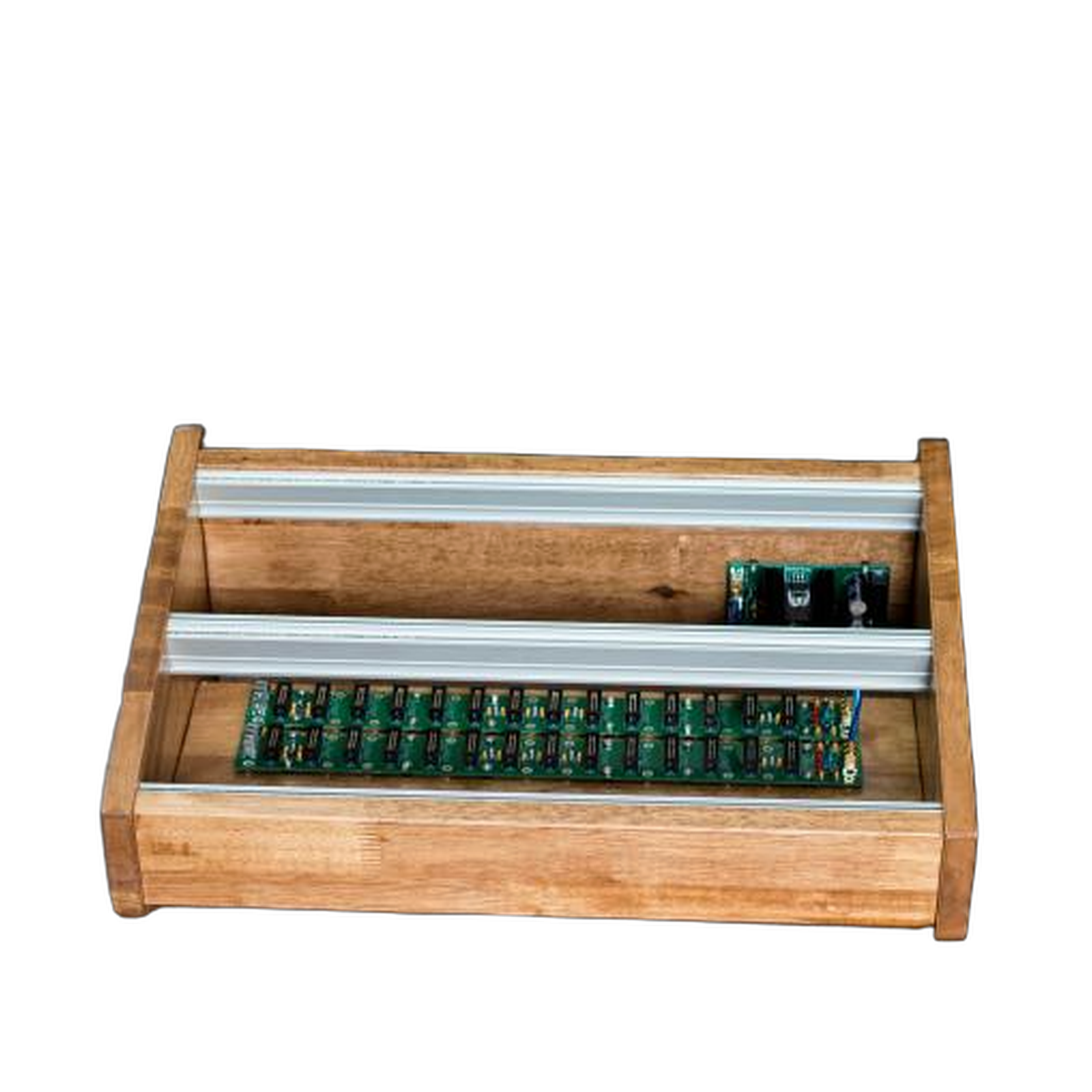
Ready to dive into the world of Eurorack modular synthesizers? The Takaab Ribcage open-rack case is the perfect starting point. Hand-crafted from eco-friendly rubber wood, this case is both stylish and functional, with 2 rows (6U) of 84hp/104hp of space for your modules.
Powered by the Takaab Core and Plexus system, the Ribcage supplies 1.1A on both the +12v and -12v rails, and also includes a separate step down converter that powers the +5v rail from the +12v rail. Designed specifically for studio or home use, the Ribcage features plenty of ventilation and can be used in either a desktop or vertical position.
Whether you're just starting out or looking to expand your existing setup, the Takaab Ribcage is an excellent choice for any Eurorack enthusiast.
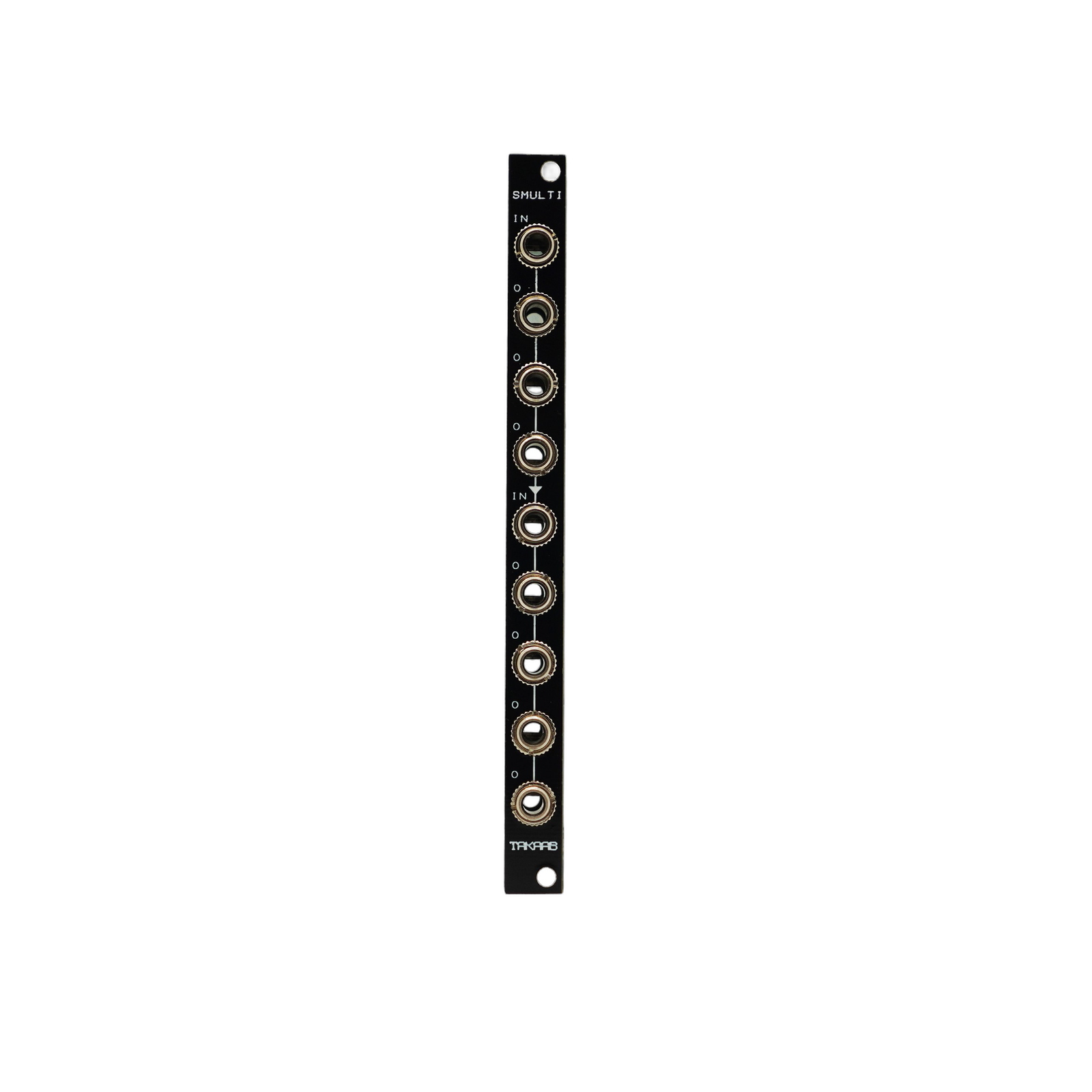
This passive module works as a 1 in 7 out multiple or as two smaller multiples. Any signal or voltage put into the top input will be split between the 7 outputs of the module. When a signal or voltage is added into the lower input, this creates two separate multiples - So the top input is then split between the top three outputs, and the lower input is split between the bottom 4 outputs.
As this is a passive module, expect some drop in level. However, it is still useful for most applications where a 1v/oct signal does not need to be maintained.
1x "1 in 7 out" multi -OR- 1x "1 in 3 out" multi + 1x "1 in 4 out" multi.
Module depth: 1.4cm.
Passive - no need for power.
Size: 2hp
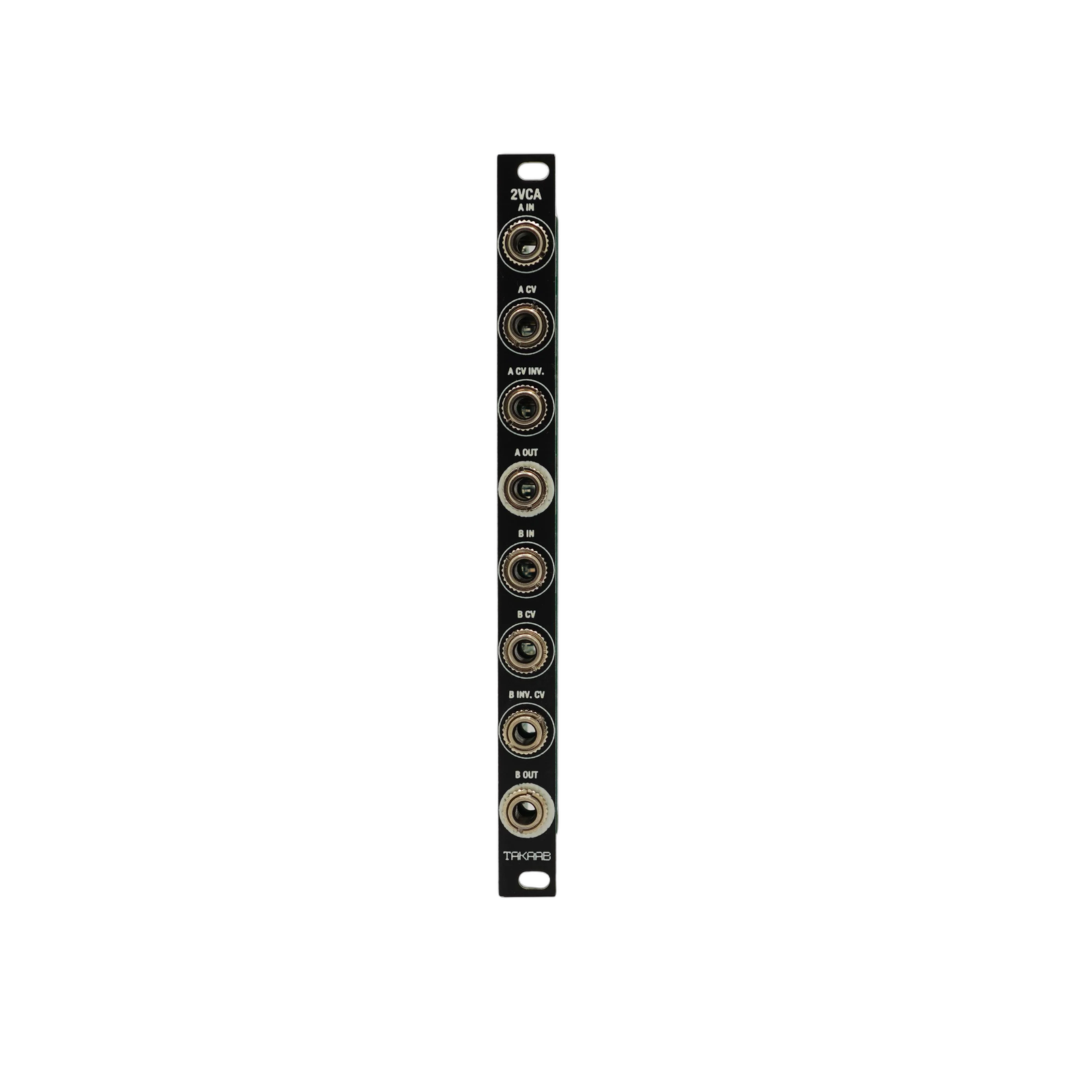
Version 2 is very similar to version 1 - it is pre-offset to be normally closed, a positive voltage applied to the CV input will amplify any AC or DC signal present at the input, with +5V giving unity gain. It will accept voltages of up to 10V amplifying the signal up to x2.
New to version 2 are the CV INV. Inputs. This inverts any CV and sums it with the non-inverted CV input. A useage example is to use the non-inverted CV input to control the main dynamics of the voice, then a positive voltage at CV INV. input can be thought of as a secondary subtracting or ducking control.
Furthermore a jumper on the board allows you to set ‘auto-offset’ to the CV INV. control (a single jumper affects both gates). When the unit is set up like this inserting a jack into CV INV. (even with no signal) automatically applies a +5V offset to the VCA, opening it up at unity gain so that any signal at the input is present at the same level at the output. Input CVs will amplify or attenuate the signal from this unity gain point.
Size: 2hp
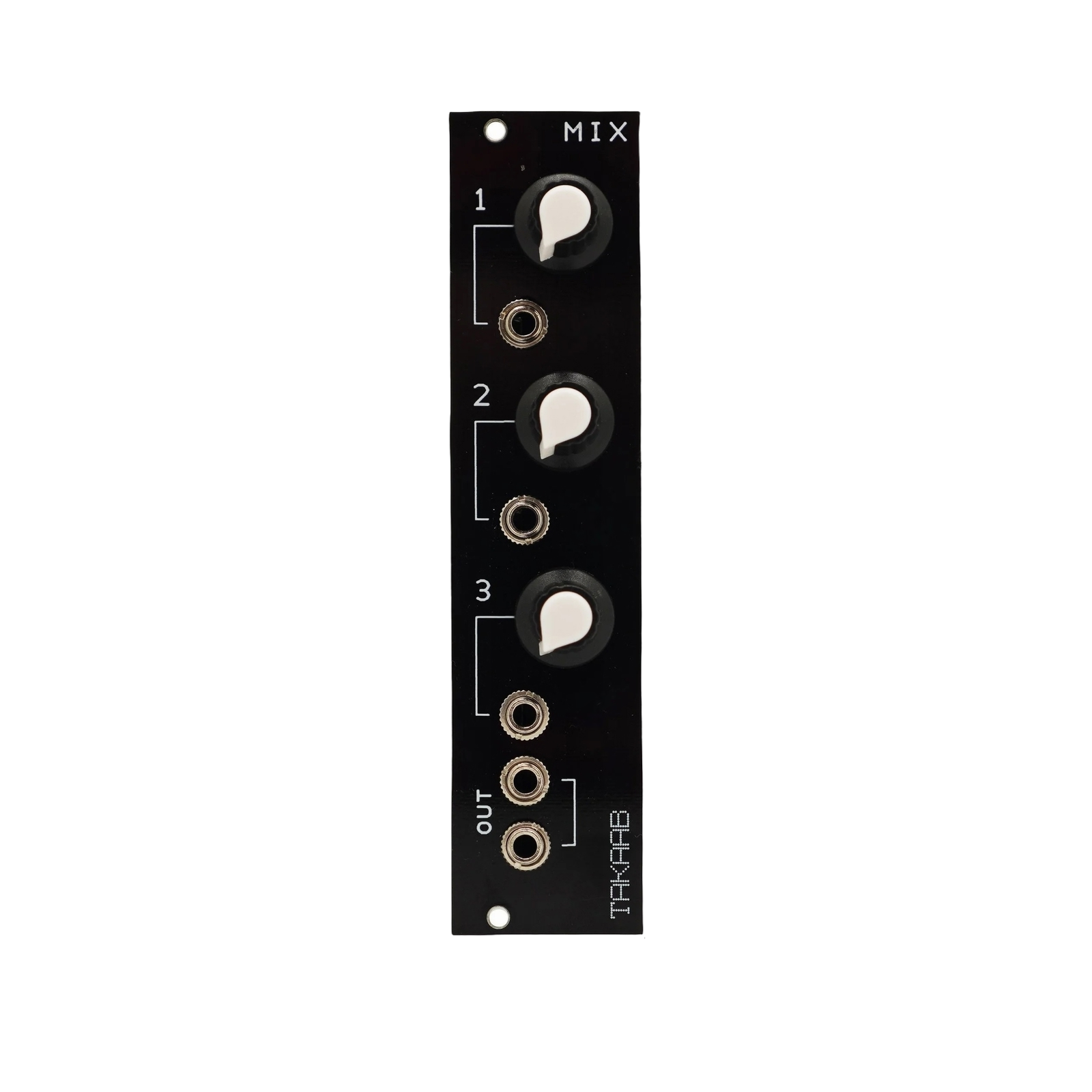
A basic but useful 6HP three channel powered mixer for your Eurorack Synthesizer. Use to sum and attenuate either voltages or audio signals.
3 attenuatable inputs, 2 (duplicate) outputs.
Runs off +/-12v standard eurorack power supply.
Size: 6hp

3 variable LFOs of varying frequency ranges in one handy 6HP eurorack module. LFO 1 is the fastest with LFOs 2 and 3 being slower by a factor of 10 and 100 respectively. Each oscillator outputs both square(ish) and triangle waves.
Approximate frequency ranges:
LFO 1: 4 ms (250hz) - 0.76 seconds
LFO 2: 40ms (25hz) - 7.6 seconds
LFO 3: 0.4 seconds (2.5hz) - 76 seconds
Module depth: 37mm.
2 outputs per LFO (square* wave and triangle wave).
Runs off +/-12v standard eurorack power supply.
Size: 6hp
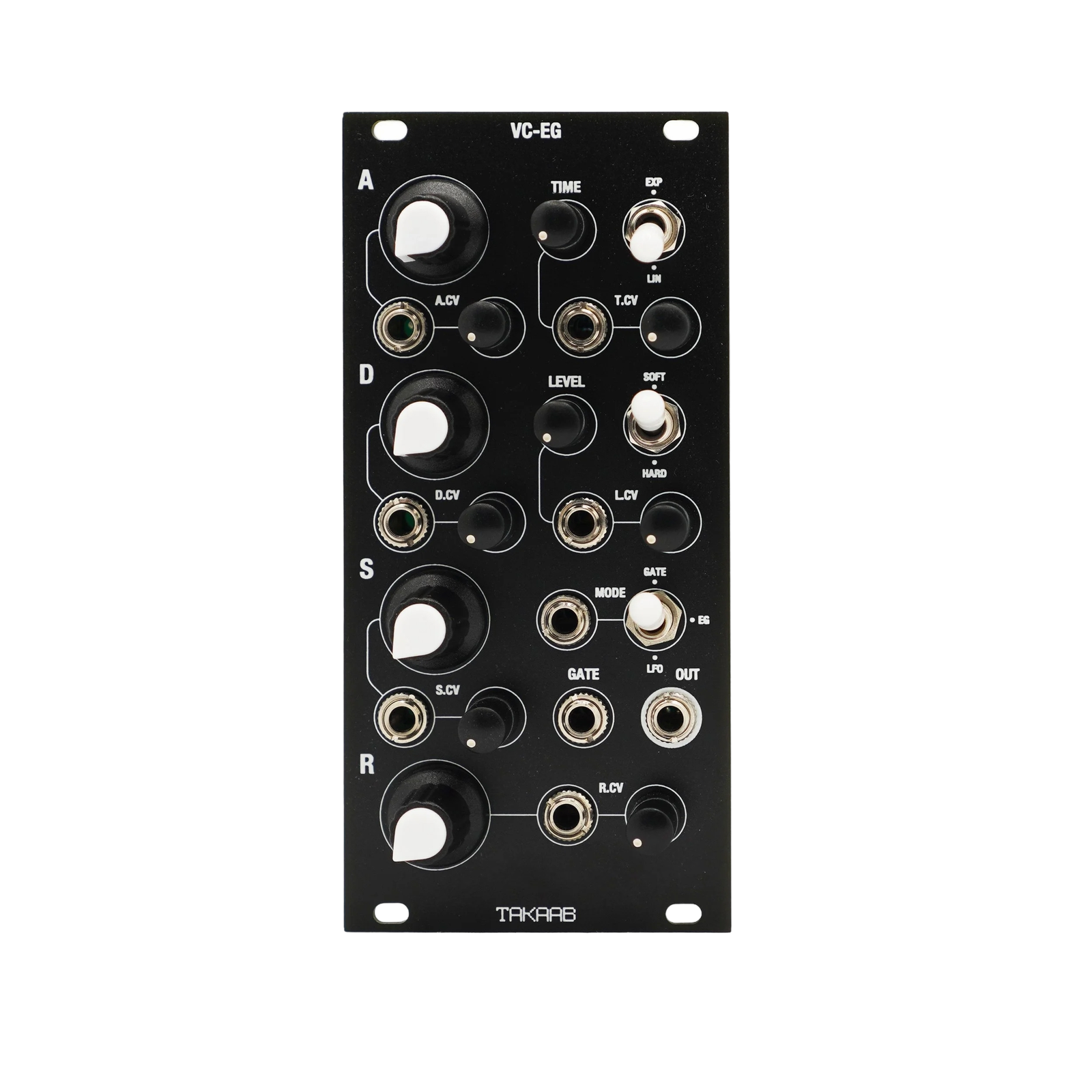
The VC-EG is a full-featured voltage controllable ADSR envelope generator with optional looping mode in 12HP. The module is digital at its core, based on the fantastic ENVGEN8 chip by Electric Druid.
There are three modes of use:
In LFO mode the module loops constantly through the 4 stages of the envelope regardless of any gate input (release happens as soon as the decay drops down to the sustain level). In this case the A, D, S, R and Time controls/cvs alter the frequency and waveshape of the the cycle, making it a fairly powerful, uni-polar voltage controlled LFO, capable of frequencies up to 300Hz
GATE mode is the same as LFO mode but only loops while a gate is being received.
EG is the normal 1-shot ADSR mode, reacting to a standard gate input. While in EG mode, it can be temporarily switched into GATE mode by inputting a separate gate into the 'Mode input'. It is possible to turn on glitchy, ratcheting effects for certain notes using this feature and it works very well if you simultaneously modulate one or more of the other parameters, such as 'Time'.
All parameters (Attack, Decay, Sustain, Release, Master Time and Level) are controllable via attenuateable CV inputs and respond to CVs of between -5v to +5v dependent on where the parameter's master knob is adjusted to.
Attack, decay, and release parameters range from a very snappy 1ms up to over 10 seconds.
The Hard/Soft toggle switch adds an extra 5ms flat stage between Attack and Decay whilst set to 'Hard'. This gives some extra punch, most noticeable on shorter, snappy sounds.
The output is switchable between linear and exponential envelope shapes.
Size: 12hp
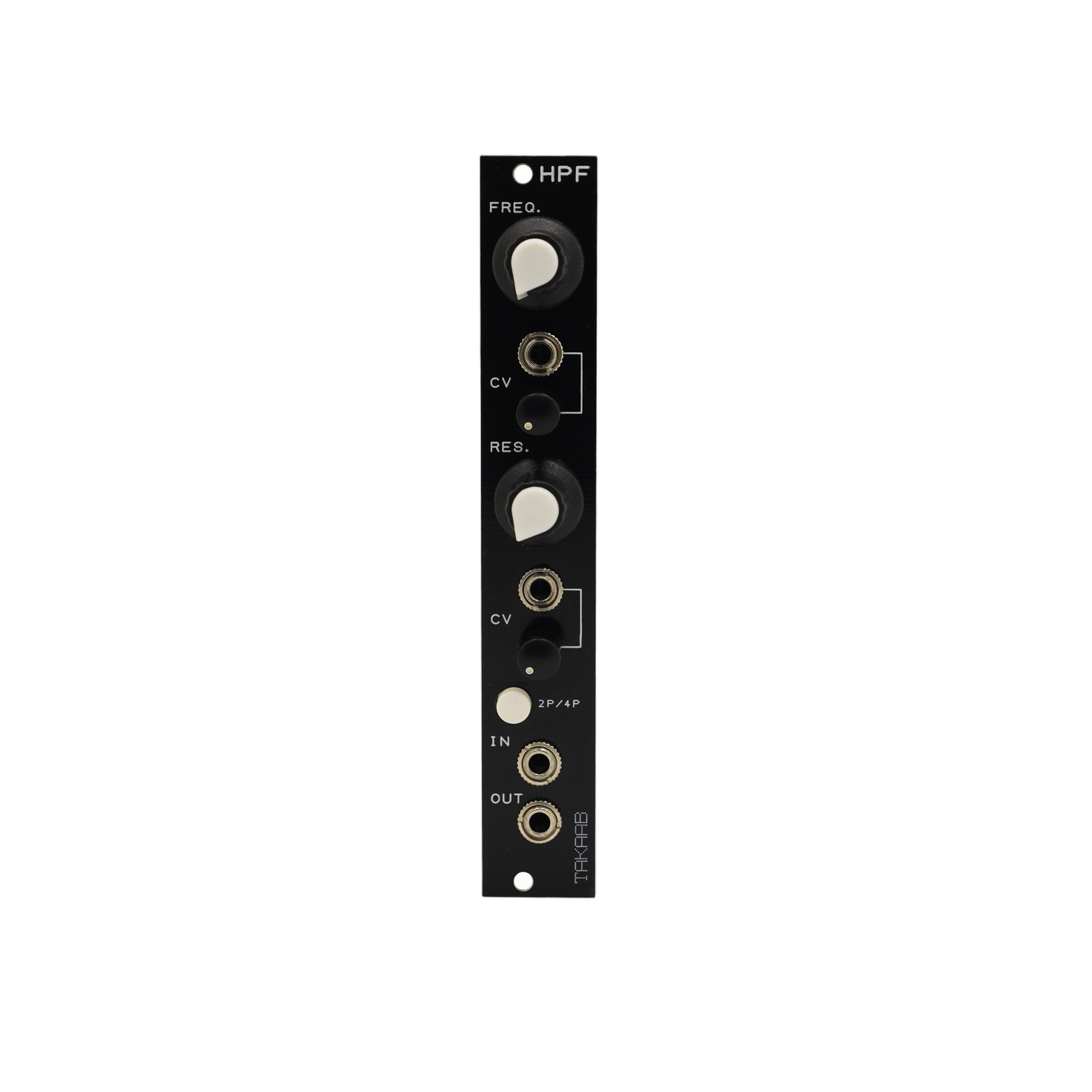
A voltage controlled high-pass filter based on the AS3320 filter chip. The HPF-3320 can be switched between 2 pole or 4 pole mode and it has attenuated CV control over cutoff frequency and resonance.
At high resonance settings the filter will self oscillate. With the cutoff CV attenuated, the filter responds to 1v/octave and as it goes out the shop it is tuned to track over 6 octaves (potentially it can track all 10 octaves and you can tweak the scale on the trimmer marked 'V/OCT' to achieve this - you need a tuner, scope or very good ears).
The HPF-3320's sibling module, the LPF-3320 is also available and the two play very nicely together. Using them in series creates a band-pass with variable Q width, or patching them in parallel you can create a notch-pass, all-pass or band-boost effect. It is interesting to have control over two separate resonance peaks while patching these.
Size: 4hp
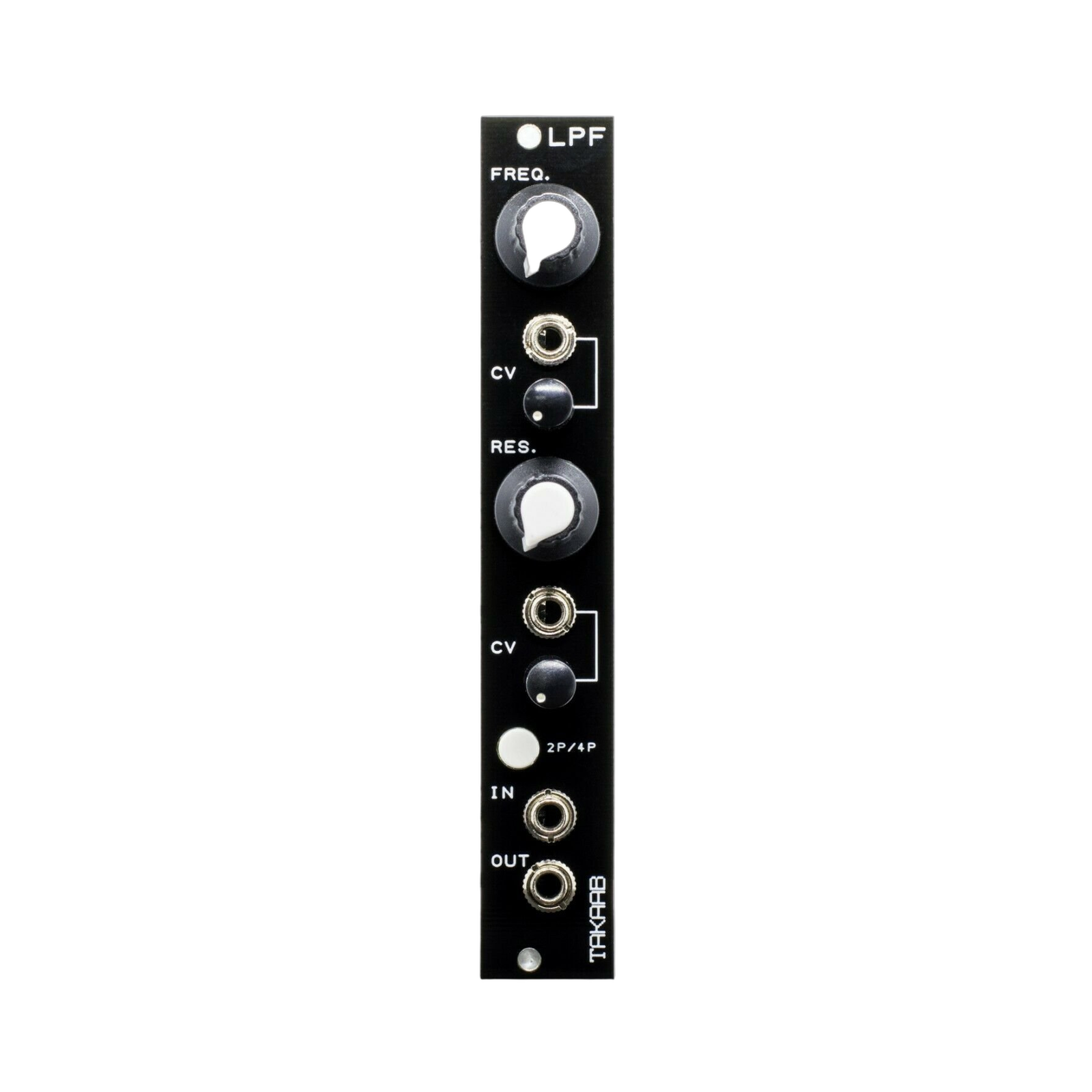
A voltage controlled low-pass filter based on the AS3320 filter chip. The LPF-3320 can be switched between 2 pole or 4 pole mode and it has attenuated CV control over cutoff frequency and resonance.
At high resonance settings the filter will self oscillate. With the cutoff CV attenuated, the filter responds to 1v/octave and as it goes out the shop it is tuned to track over 6 octaves (potentially it can track all 10 octaves and you can tweak the scale on the trimmer marked 'V/OCT' to achieve this - you need a tuner, scope or very good ears).
The LPF-3320's sibling module, the HPF-3320 is also available and the two play very nicely together. Using them in series creates a band-pass with variable Q width, or patching them in parallel you can create a notch-pass, all-pass or band-boost effect. It's interesting to have control over two separate resonance peaks while patching these.
Size: 4hp
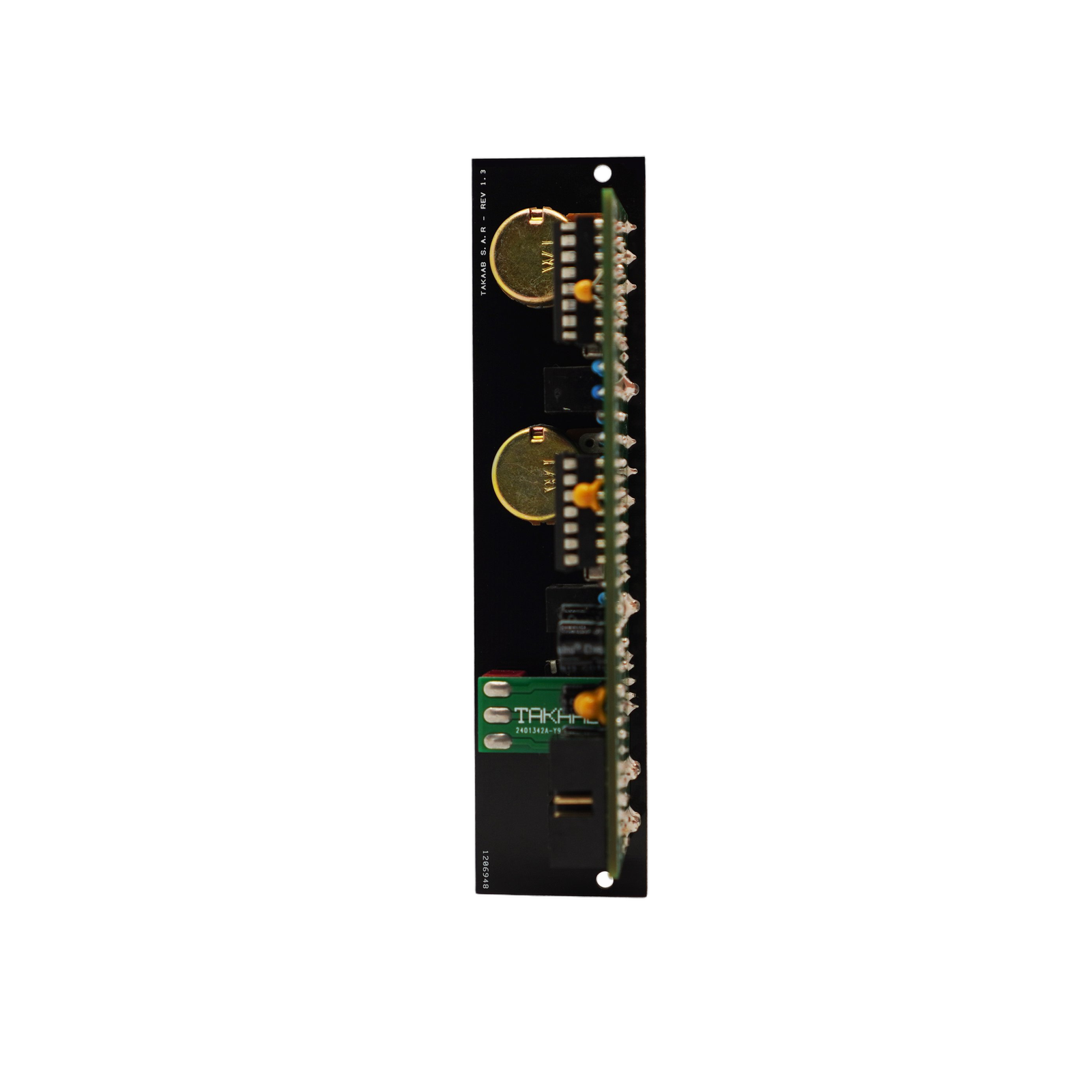
The Takaab S.A.R (Slide, Attack, Release) is a voltage lag generator designed primarily to function as either a portamento/slide circuit or an AR envelope generator.
With both the push switches out (ON) a voltage applied to the main input will be outputted with any rises or falls in voltage being slowed down dependant on where the A (attack/rise) and R (release/fall) knobs are set to. Therefore, inputting a 1v/oct control voltage will result in a portamento effect, whilst a smooth rising and falling envelope can be generated by inputting a gate.
With the switches pushed in (AUTO) the lag effect will be normally off and will be switched on whenever a gate signal is present at one or both of the adjacent jack inputs. - If a jack is only inserted into one of these inputs then any gate will affect both A and R. Plugging separate jacks into both the A and R inputs will give independent gate switching of each of these parameters.
The ‘Curve’ knob gives control over the curve of the lag, ranging from nearly linear to an exponential (shark fin) curve. It also somewhat effects the overall length, with the lag becoming a little longer the more curved it is.
The range switch changes the range of the lag time: The centre position being the shortest and is most useful for slides or portamentos. The top position is the middle setting while the lower position is the longest range – most useful for envelopes. At this range you may hear some lag even with A and R at their lowest settings if using the unit as a portamento.
Size: 6hp
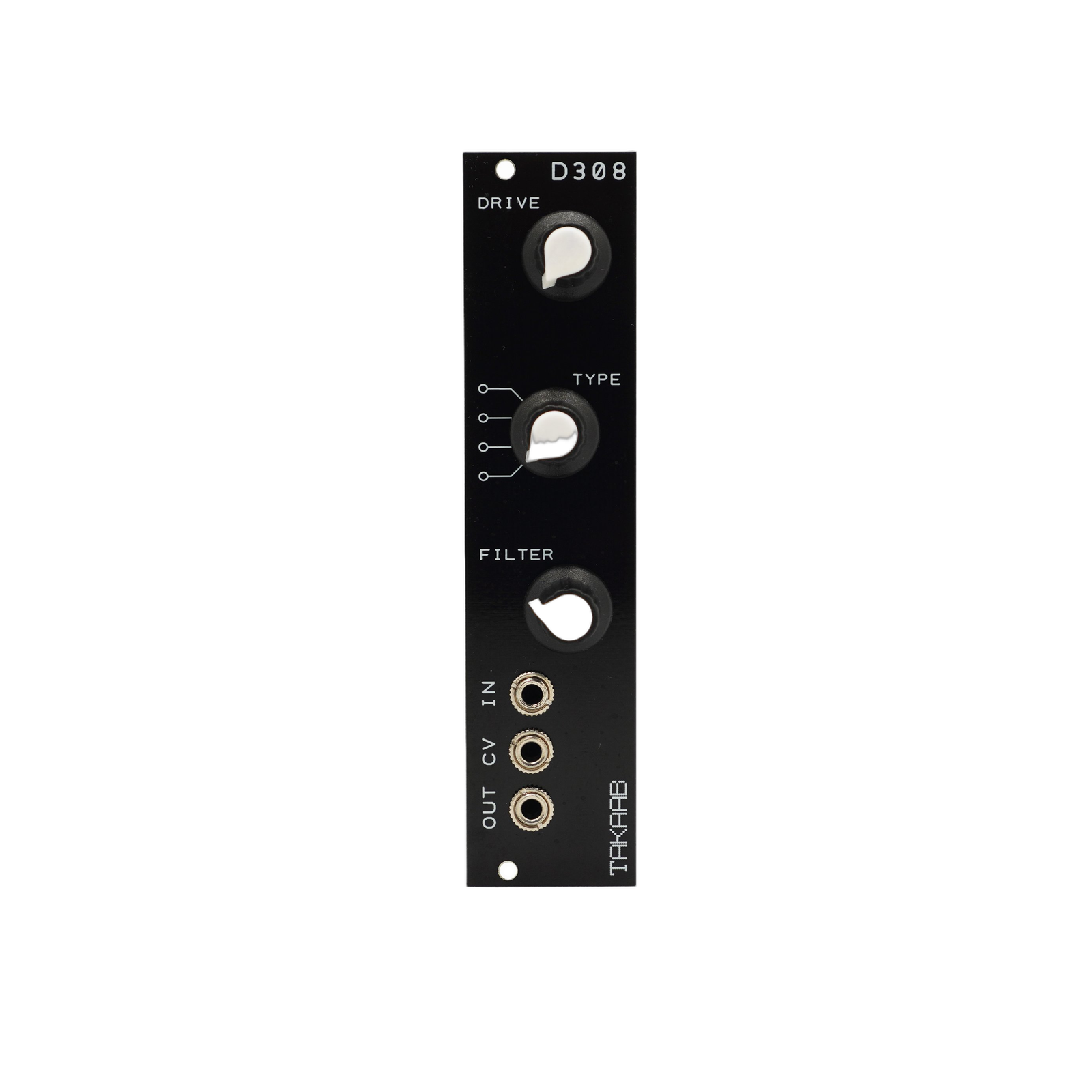
Affectionately known as “Noo Yang” or the Grilled Rat in the Siam Modular workshop, the D308 brings the sound of this vintage distortion pedal to your Eurorack system. Use it to add some grit to a patch, make acid scream or as a rudimentary waveshaper. Four flavours of fricasseed field vole are attainable via the ‘type’ switch, which inserts different diode arrangements into the clipping section of the circuit. The top two options having a thinner, fuzzier sound while the bottom two are a little cleaner with more bass present.
The CV input uses a vactrol to give some control of the overdrive amount, although this is not linear. With some distortion already applied, inputting a positive voltage up to +5v will lessen the drive. This works well with an LFO to create a tremolo. Control knobs for drive amount and a low-pass filter on the output are also present.
There is a jumper on the board which adds a classic modification for extra bass. This actually works to boost the low mids on the top two clipping types and as a subtle bass boost on the lower two. Connect the center pin to 'ORIG' for the original sound or 'MOD' to insert the bass modification. A trimmer on the board allows you to cut or boost the overall output. Left in the middle, it should output approximately the same peak-to-peak level as the original input.
Size: 6hp

An exponential (dB) gain voltage controlled amplifier for Eurorack modular systems. This is a flexible module with wide-ranging controls to suit various applications. Includes two signal (audio or voltage) inputs, two summed attenuated CV inputs and bias control.
Size: 2cm x 128.5cm x 5.2cm.
Usage notes:
Bias control goes from -6v to 0v. Position fully clockwise for +v/-v tremolo style effects, or position below halfway for use with envelopes or other 0v/+v control voltages.
Because of the range of the CV gains it is possible to distort the signal depending on the input levels. This can be desirable, but usually setting the CV around half way is a good starting point for good amplification without distortion.
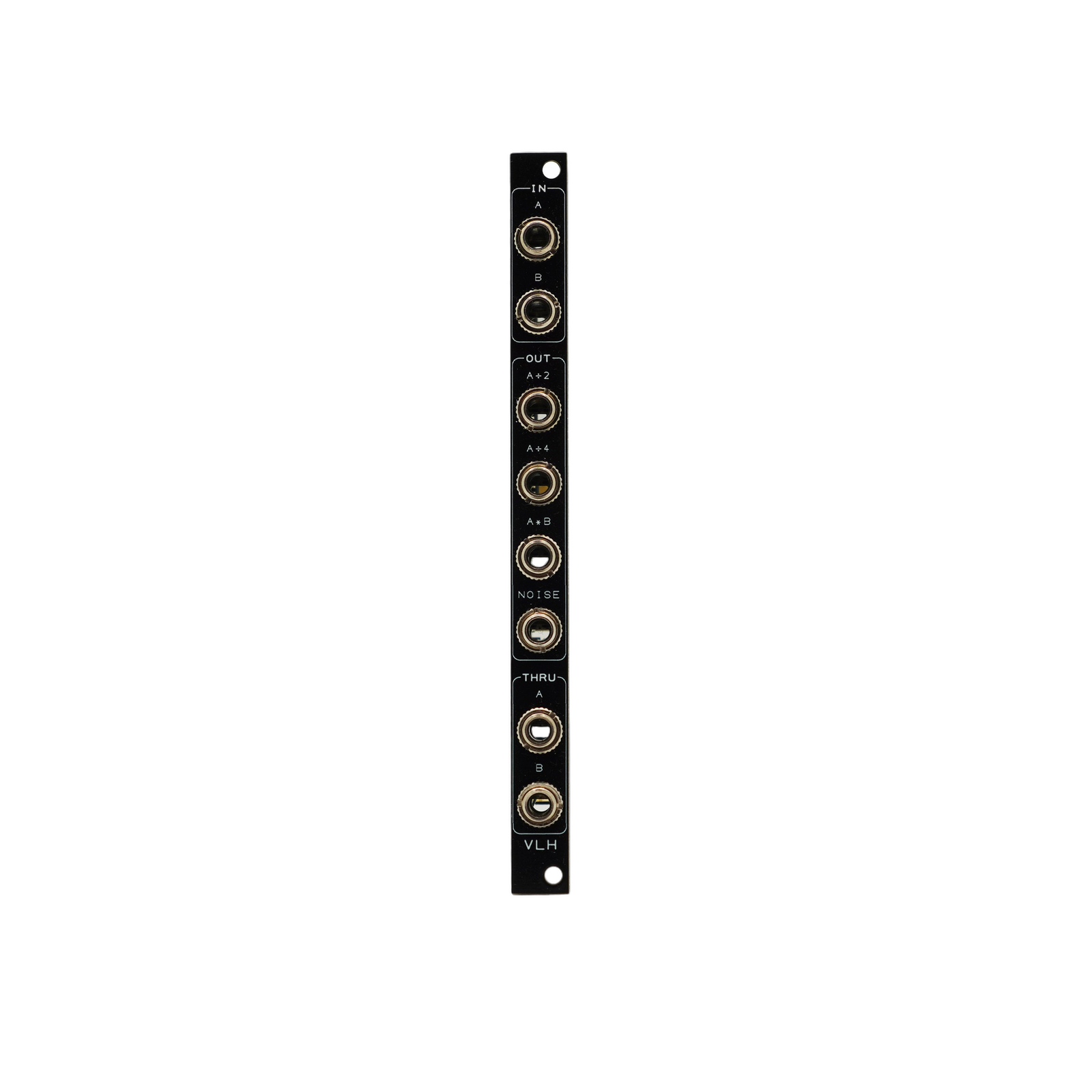
VCO’s Little Helper is a Eurorack module that supercharges your existing oscillators by adding a ring mod, sub and noise. The VLH was designed in collaboration with journalist and musician Steve O'Hear following a conversation asking how we could squeeze the features found in the VCO section of many vintage synthesizers into a Eurorack system. Specifically, we set ourselves the challenge of designing a great sounding ring modulator, coupled with two ‘sub oscillators’ (frequency dividers) and a noise generator, all packaged into a module small enough to demand space in any eurorack case. At just 2hp in size, the resulting all-analog design has A and B inputs (intended to receive up to two VCOs), ring mod (A carrier/B modulator), sub1 (A -1 octave), sub2 (A -2 octaves), noise, and A and B thrus.
A*B - The ring modulator acts on the original signals, with the modulator (input B) behaving something like an attenuverting VCA on the carrier (input A). The result is A*B effectively kicks out the sum and difference between the frequencies of the two input signals. The sound can range from wacky sound effects (a la 1950's and 60's sci-fi) but it can also create very musical, harmonic sounds if the two input frequencies are musically related. The texture of the resulting sound also differs depending on the input waves - pure sine waves create soft clean tones, while saw-tooth and square waves spit out harder more gritty sounds.
A÷2 and A÷4 are sub oscillators that put out square waves at 1/2 and 1/4 of the frequency of input A. A÷2 is also normalised to input B so that the functionality the VLH's modulator can be attained with only a single VCO patched into input A (although, admittedly, things get a lot more interesting harmonically when both the A and B inputs are patched with different signals).
NOISE is an analog noise source in a very usable range which is near-enough white noise with some roll-off at the lower and top end of the audible range.
A and B 'THRU's are passive mult's of the original signals, allowing you to easily re-use your VCOs elsewhere in a patch without having to first un-patch the VLH or use a separate mult.
Those trimmers - Please ignore. They shouldn't need to be touched by the end user. 'NOISE LEVEL' does exactly what it says, but should already be trimmed to +/-5V when it ships. 'TRIM CARRIER' and 'TRIM MODULATOR' again are preset before shipping. You shouldn't need to touch these unless you hear an issue with the modulator sound and know what you are doing. Similarly there are a pair of solder-jumpers on the board which allow the switching of the two inputs routing to the carrier and modulator of the ring mod. You shouldn't touch these unless you understand the circuit and have the necessary equipment and know-how to re-trim the signals.
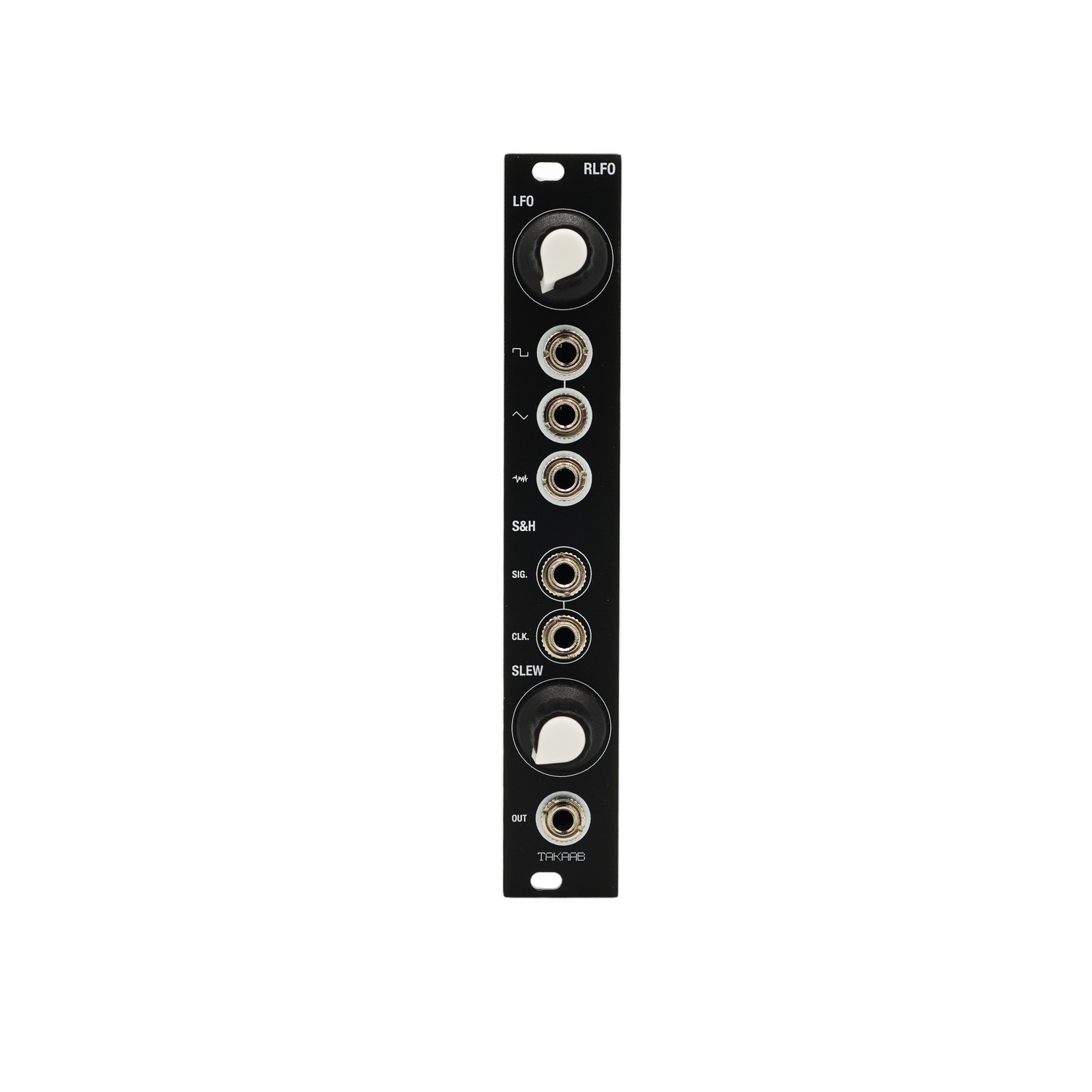
The all analog Takaab RLFO is based around a Sample & Hold circuit, but it also features a built-in LFO (which can be used as a clock) and a noise circuit; two of the most common signals that you find yourself regularly patching into a Sample & Hold.
The LFO has two outputs, Square and Triangle with the Square being internally normalised to the clock input of the S&H. Likewise the noise - which is near to white noise with some roll-off at the top and bottom of the audible frequency range - is normalised to the signal input of the S&H. This means that without any external patching the RLFO will output a random, stepped voltage. Furthermore a slew circuit on the output can soften these steps for more gradual or wobbly control voltages.
You can sample any external signal, be it audio or CV by inputting it into the SIG IN. Similarly an external clock, gate or trigger signal in the CLK IN jack will replace the internal clock in triggering the sample points of the S&H. When external signals are input into the CLK IN and/or SIG IN then the internal LFO and Noise of the RLFO can still be used independently from the Sample & Hold.
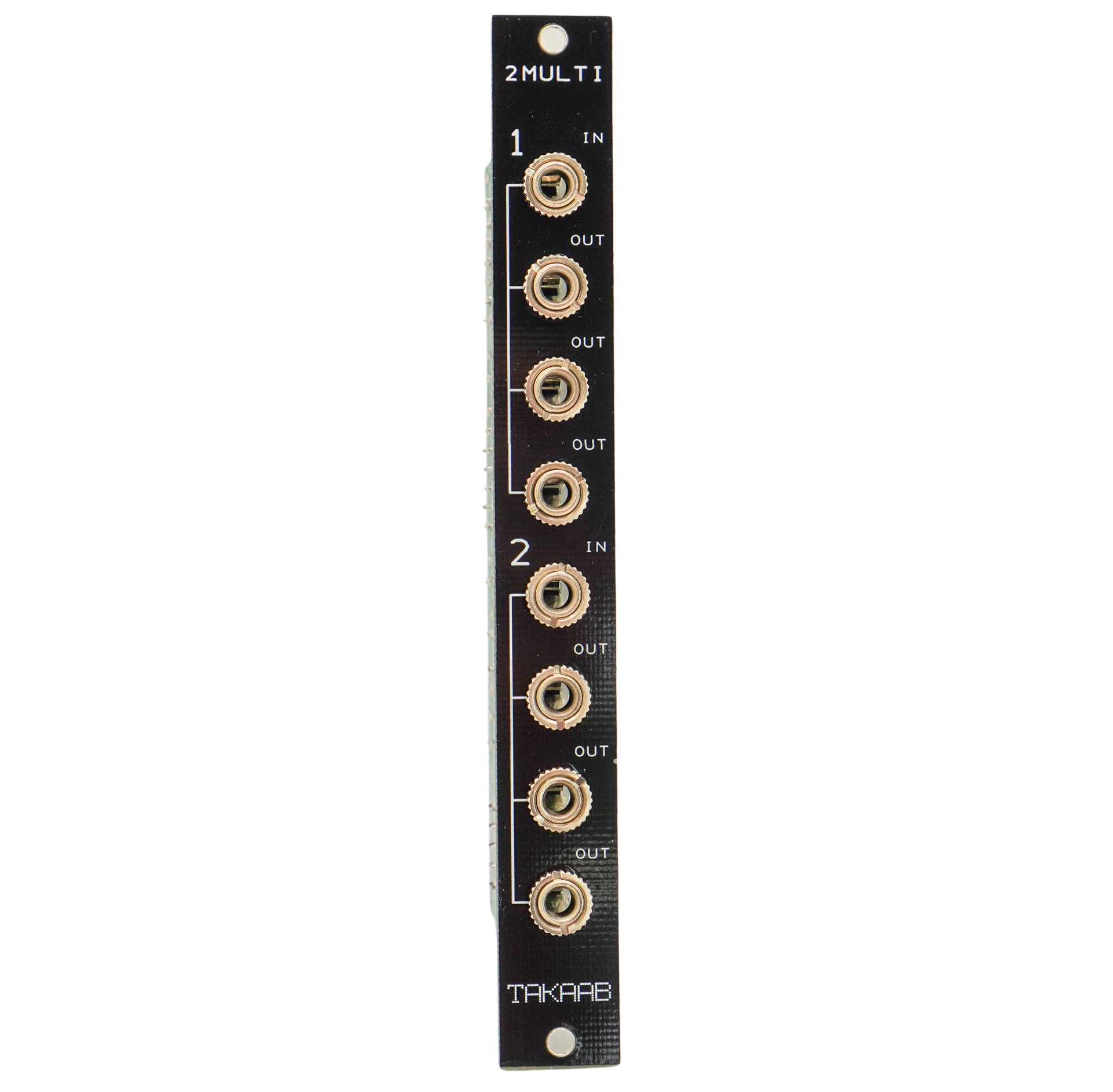
Two individual "1 in 3 out" buffered signal splitters in a single 3HP module. Each of the inputs connects to three outputs at the same level. Use whenever you need to split a signal without any voltage or level drop, for instance to route a 1v/octave CV to three oscillators.
Size: 1.5cm x 128.5cm x 3.86cm.

This passive module works as a 7 in 1 out mixer or as two smaller mixers. Any signals or voltages put into the inputs of the module will be mixed and output from the bottom out. When a jack is inserted into the middle out, this creates two separate mixers - So the top inputs are mixed and output from the middle out, while the lower inputs are mixed and output from the lower out.
As this is a passive module, it is not unity gain so expect a drop in level of all inputs as each extra signal is inputted. despite this, it is a useful module for mixing audio signals or summing control voltages where accuracy is not of importance.
1x "7 in 1 out" mixer
-OR-
1x "3 in 1 out" mixer + 1x "4 in 1 out" mixer.
Size: 2hp
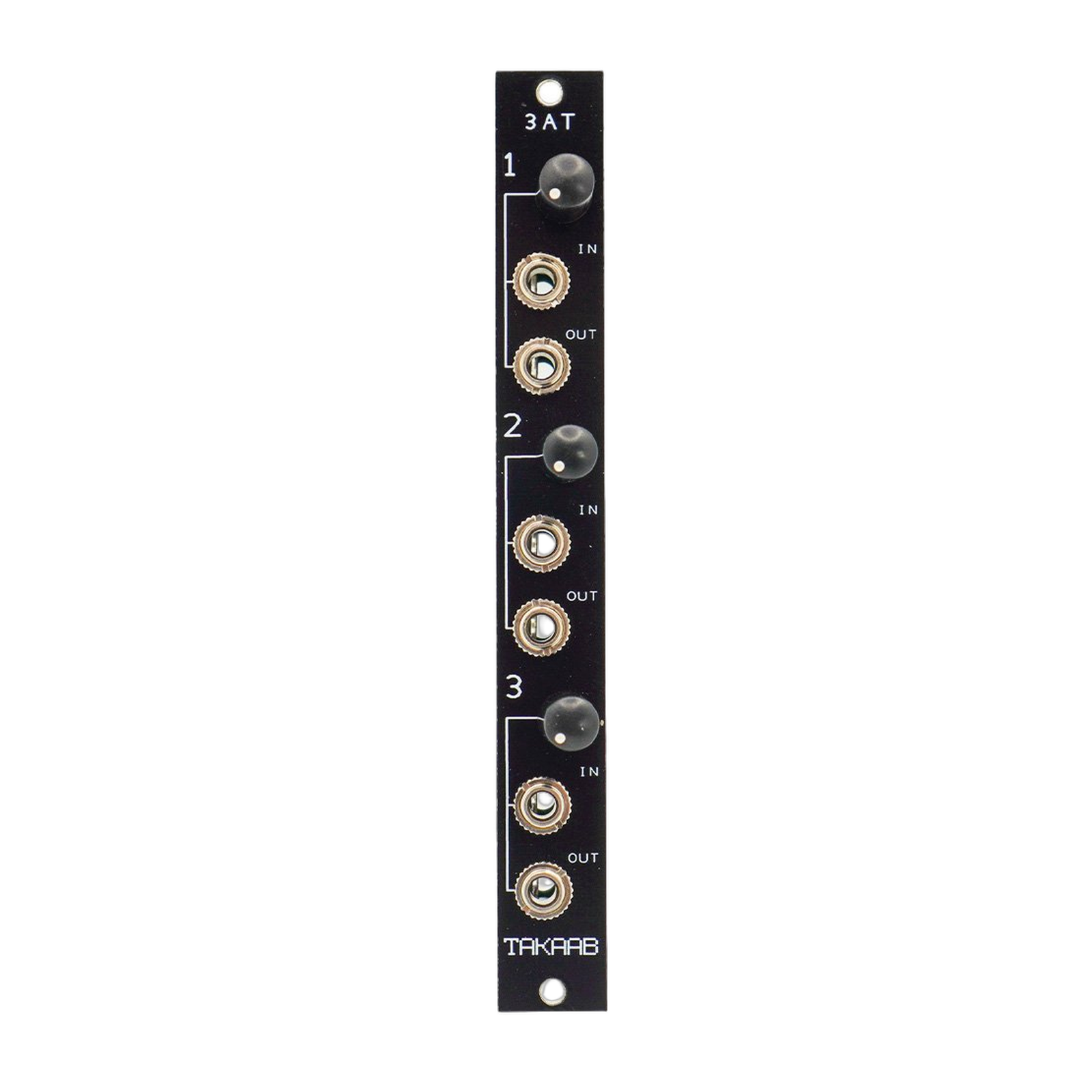
Three individual in-out signal trimmers in a single 3HP module. Each of the inputs connects to an output via an attenuation knob. Use to gain control of a signal's volume or whenever you need a little less voltage before inputting a CV into another module.
Size: 1.5cm (3HP) x 128.5cm x 2.8cm.
Module depth: 1.5cm.
3x in-out signal attenuators.
Passive (does not require power).
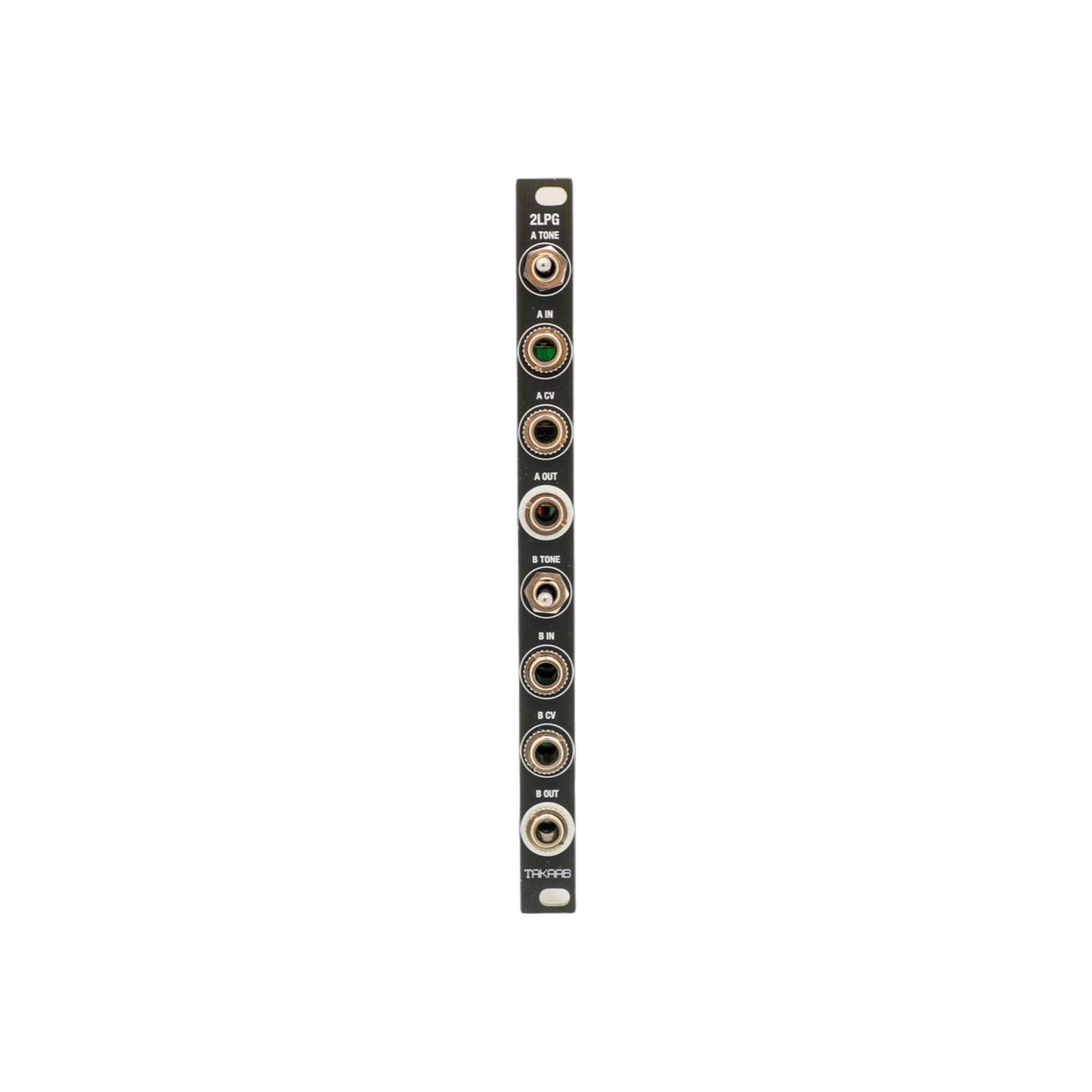
Two passive vactrol-based low-pass gates. Works like a rudimentary VCA with some level-dependent filtering on the output signal at varying amounts dependent on the ‘Tone’ setting. Creates ‘organic’ feeling sounds especially on short, plucky and percussive sounds. Or can be used to modulate another CV in the same way as a VCA, albeit less responsively and non-linear.
With the ‘Tone’ switch in top position, the sound has some filtering, but higher control voltages can open the filter near-completely. The bottom position is the dullest, with the most low-pass filtering. Leaving the switch in the centre position gives next-to no filtering although the signal is still somewhat coloured by the circuit.
One quirk of the module is the relatively sluggish response time, especially on the down-slope, this adds to the plucky sound and also gives a natural ‘release’ to the CV, meaning it works very nicely by simply feeding a gate signal into the CV input without the need for an envelope. This release is dependent again on the tone setting, so the darker setting has a shorter release compared to the bright setting which has a very long release.
The top CV and and Signal inputs are normalized to the bottom inputs.
Size: 1.1cm (2HP) x 128.5cm x 3.8cm.
Module depth: 2.5cm.
2x low pass gates.
Passive - does not require power.
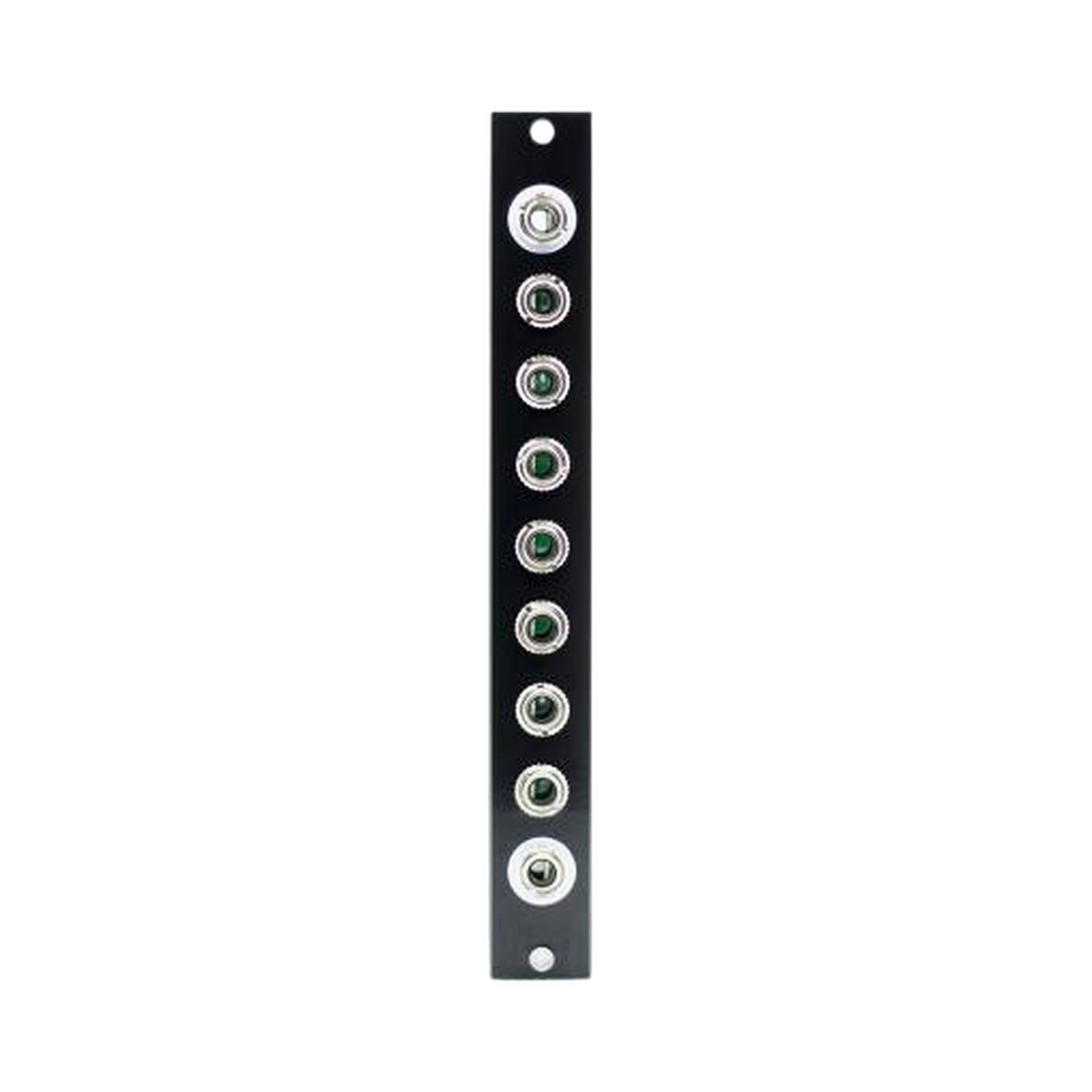
The left and right outputs of Nearness are at the top and bottom. The 7 jacks between these are all mono inputs. Each input has a different pan ratio depending on how close to an output it is, meaning the centre input is panned 50:50 to each output, other inputs are panned progressively harder to the output they are closer to, until the inputs adjacent to outputs are panned almost completely to that output.
The level for each output can be switched with a jumper between 1:1 amplification (for use inside the eurorack system) or -6db line level (in case you use Nearness as the output module of your system).
Size: 3hp
A stable, reliable analog VCO with a rich warm sound.
The design is based around the AS3340 triangle-core oscillator IC which itself was based on the legendary Curtis CEM3340. The addition of an 11-pole +/-5 octave switch makes it useful and flexible, ideal as a live VCO. The center position being approx C1 means it can be pitched down well into down into VC-LFO territory.
The TUNE control allows for trimming of the pitch by half an octave up and down while PULSE WIDTH sweeps the duty cycle of the square wave from 50% to just under 100% positive. The additional attenuated PWM input allows for voltage control of the duty cycle which can surpass the range reachable by the knob.
Besides the OCTAVE and TUNE controls, the pitch can be modulated via the V/OCT input (at 1v/oct) and also by the separate, attenuated FM input which can either effect the frequency in a linear or exponential fashion.
A rising edge at the SYNC input will reset the wave. Adding a pulse or ramp wave from another oscillator will hard-sync the VCO-3340.
Size: 8HP