 Image 1 of 2
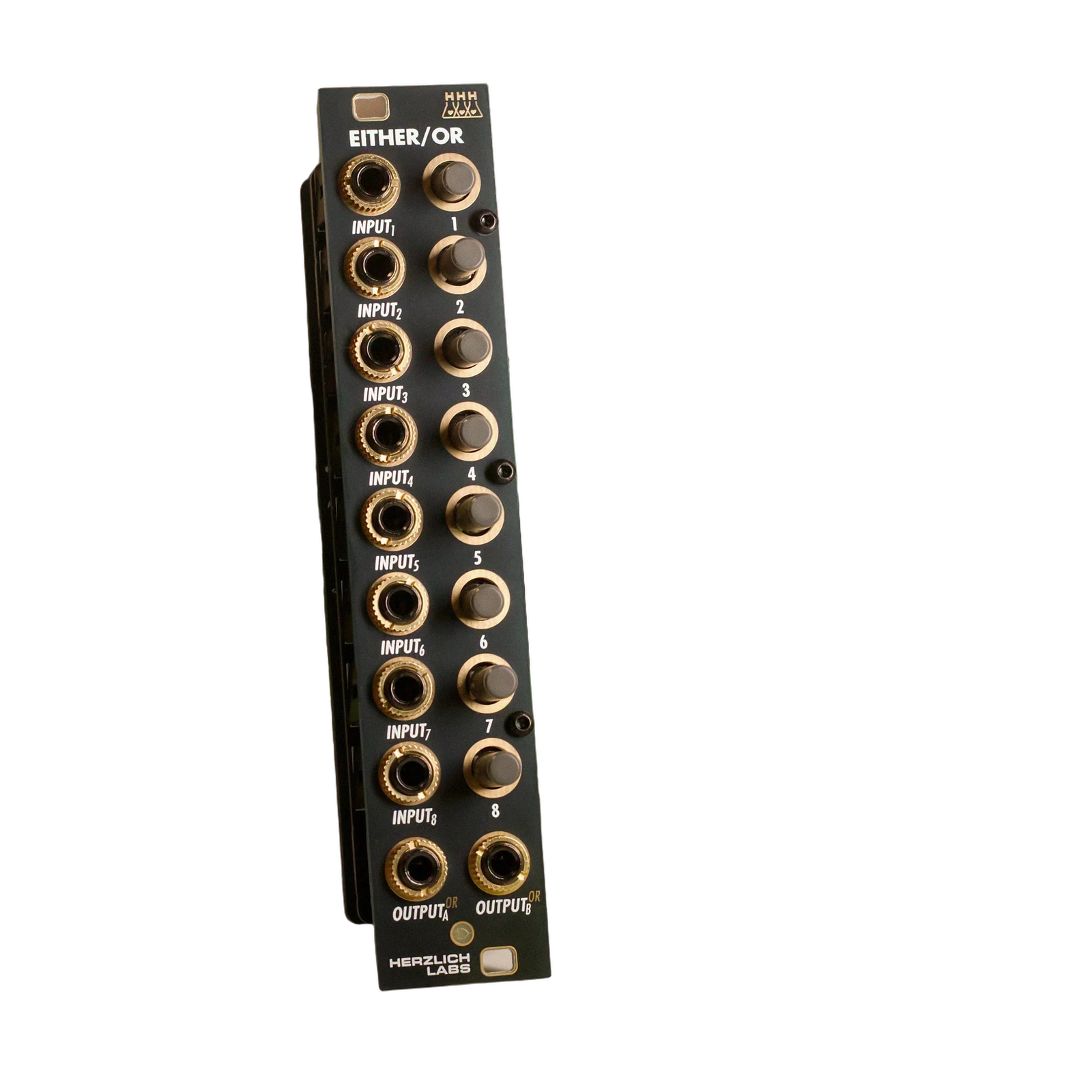 Image 2 of 2
Choose something. Choose nothing.
There was a philosopher who wrote a book about how to live your life in the 1840s. He wrote it from the perspective of two different people, who had vastly different answers to Aristotle's question, "How should we live?"
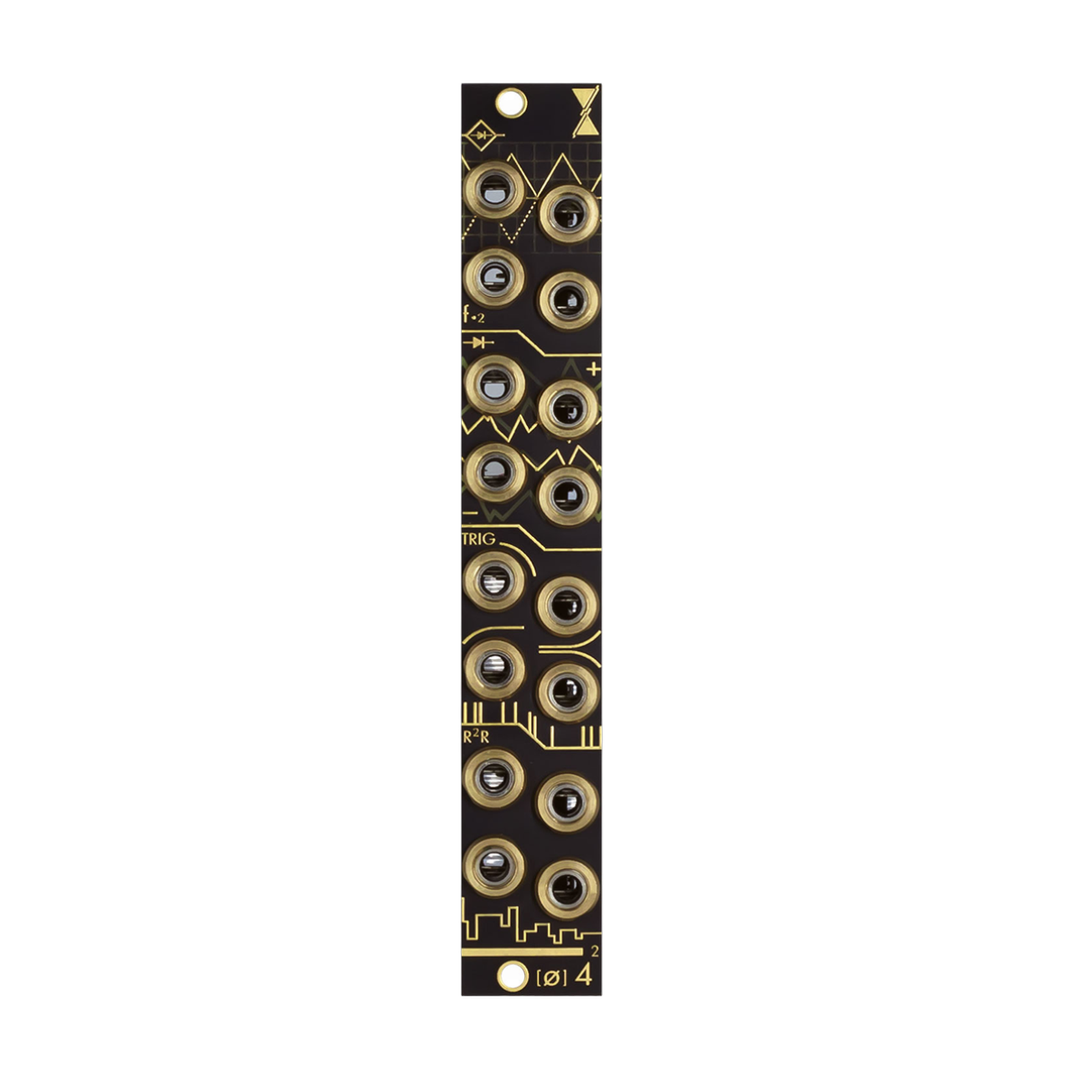
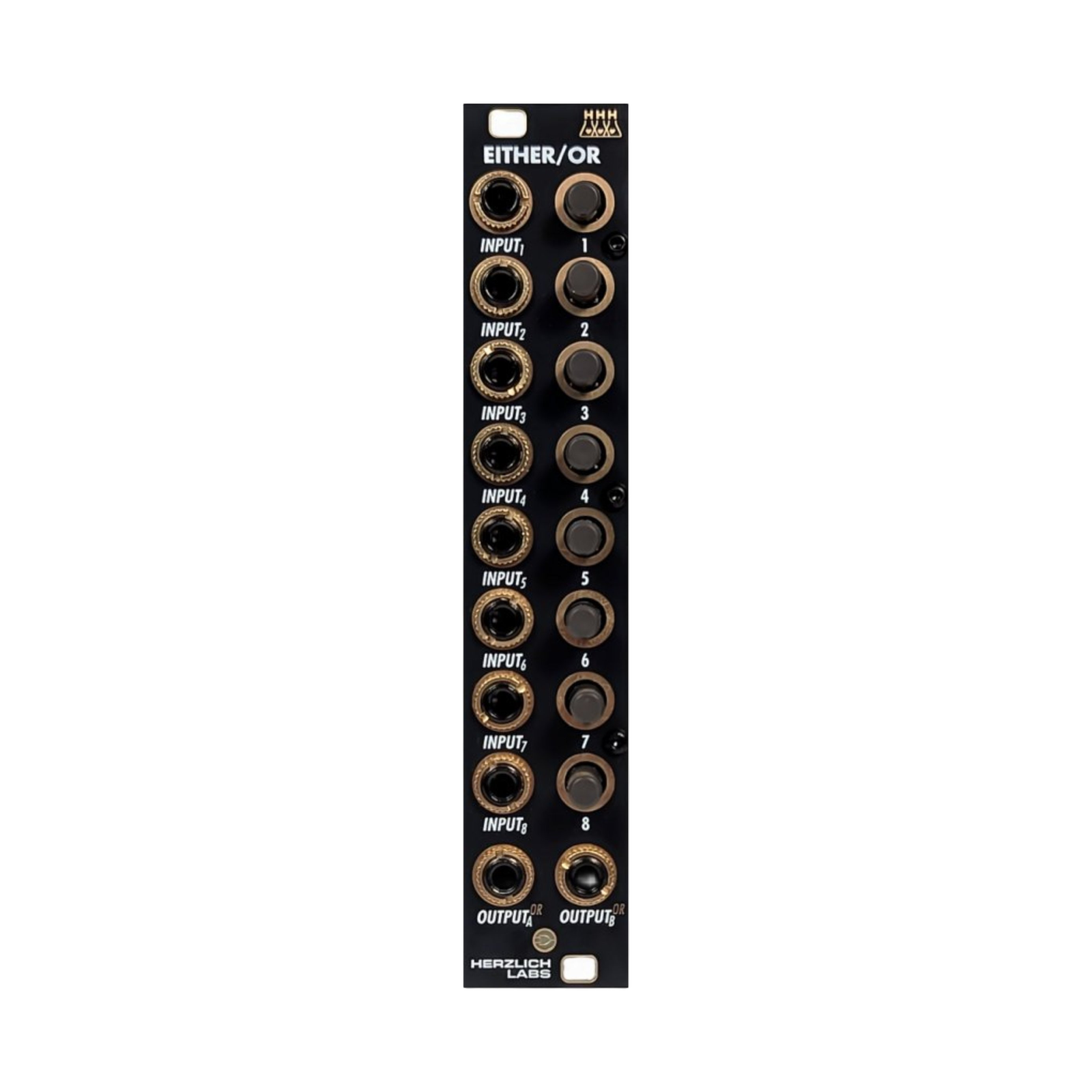
What he did not account for, however, was the sheer power of the passive OR logic node. Had he known about this, I am certain he would have reached a different conclusion at the end of his book, safe in the knowledge that you can combine up to 8 different CV, trigger and clock signals (audio, too, if you're OK with half-wave rectification) and freely assign them to either bus A or B right at the end, in order to generate complex modulations, rhythms and much more.
• Analog logic circuit designed for CV, clock, gate and triggers
• Eight inputs which can be freely assigned to output A or B
• Only passes the strongest currently present signal, while blocking others
• Passive design: draws no power from your case
Choose something. Choose nothing.
There was a philosopher who wrote a book about how to live your life in the 1840s. He wrote it from the perspective of two different people, who had vastly different answers to Aristotle's question, "How should we live?"
What he did not account for, however, was the sheer power of the passive OR logic node. Had he known about this, I am certain he would have reached a different conclusion at the end of his book, safe in the knowledge that you can combine up to 8 different CV, trigger and clock signals (audio, too, if you're OK with half-wave rectification) and freely assign them to either bus A or B right at the end, in order to generate complex modulations, rhythms and much more.
• Analog logic circuit designed for CV, clock, gate and triggers
• Eight inputs which can be freely assigned to output A or B
• Only passes the strongest currently present signal, while blocking others
• Passive design: draws no power from your case