

Clatters Machines
〰️
Knob Technology
〰️
Neutral Labs
〰️
Flora Synths
〰️
Tesseract Modular
〰️
Xaoc Devices
〰️
Herzlich Labs
〰️
Clatters Machines 〰️ Knob Technology 〰️ Neutral Labs 〰️ Flora Synths 〰️ Tesseract Modular 〰️ Xaoc Devices 〰️ Herzlich Labs 〰️
Featured in Eurorack

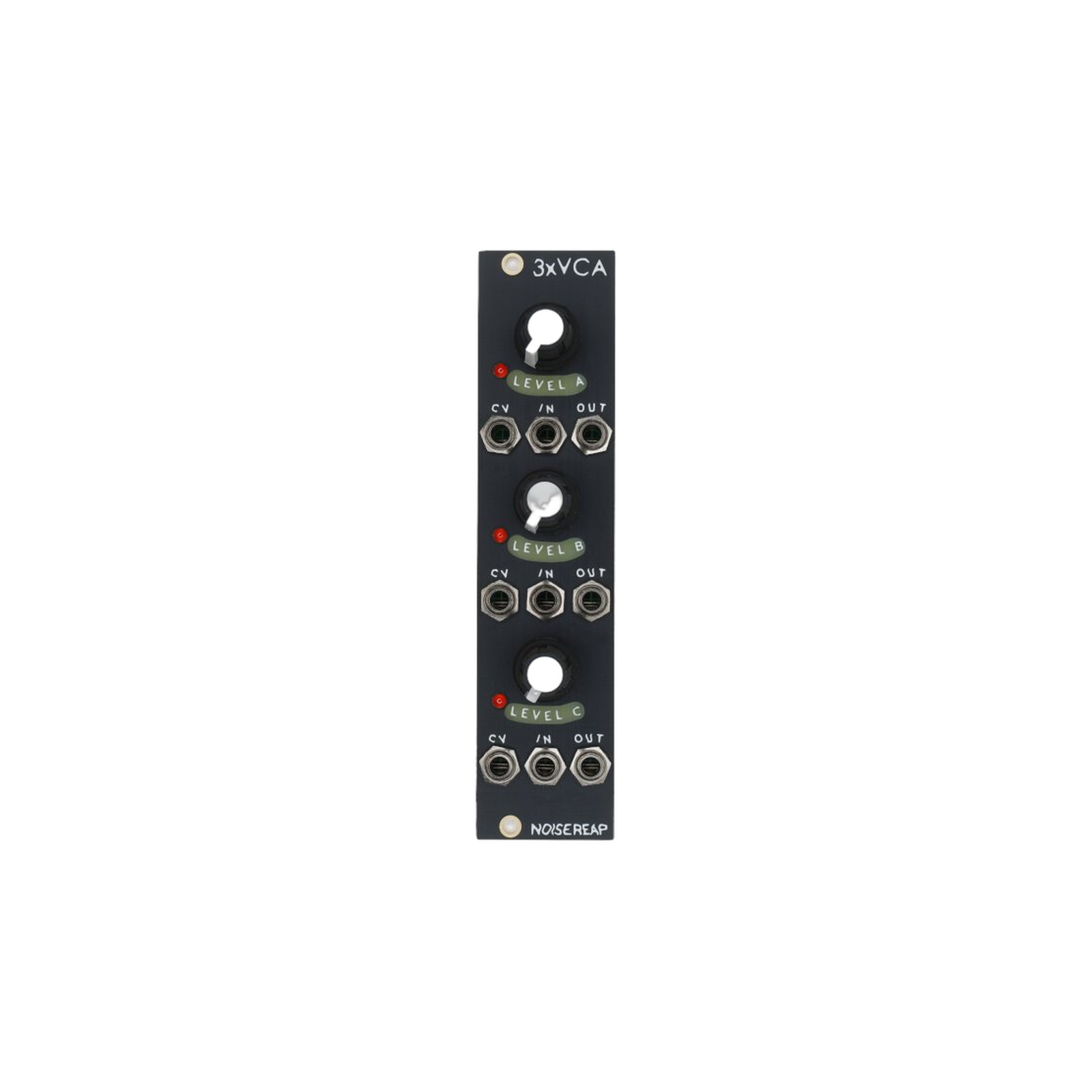
3xVCA is a trio of high quality VCAs.
An intuitive one-knob design acts as both an attenuator and gain control.
Features
100% Analog
Fast Linear Response
Clean Signal Path
Equally Suited to Audio or CV Signals
Interesting Details
One Knob To Rule Them All!
The single LEVEL knob acts as both an attenuator and gain control. Rotating left attenuates incoming CV enough to completely null the channel. Rotating right increases the gain until the input and output are at unity. This simple one knob design is very “playable” and encourages performative use.
Trio of Pairs
The VCAs are built of discrete transistor “long tailed pairs”. Rather than using a specialized IC, we developed the VCA core using nothing but matched transistors and precision 0.1% components. Does this matter to the sound? Not really, but we still think it's cool!
Size: 6hp

This passive module works as a 7 in 1 out mixer or as two smaller mixers. Any signals or voltages put into the inputs of the module will be mixed and output from the bottom out. When a jack is inserted into the middle out, this creates two separate mixers - So the top inputs are mixed and output from the middle out, while the lower inputs are mixed and output from the lower out.
As this is a passive module, it is not unity gain so expect a drop in level of all inputs as each extra signal is inputted. despite this, it is a useful module for mixing audio signals or summing control voltages where accuracy is not of importance.
1x "7 in 1 out" mixer
-OR-
1x "3 in 1 out" mixer + 1x "4 in 1 out" mixer.
Size: 2hp
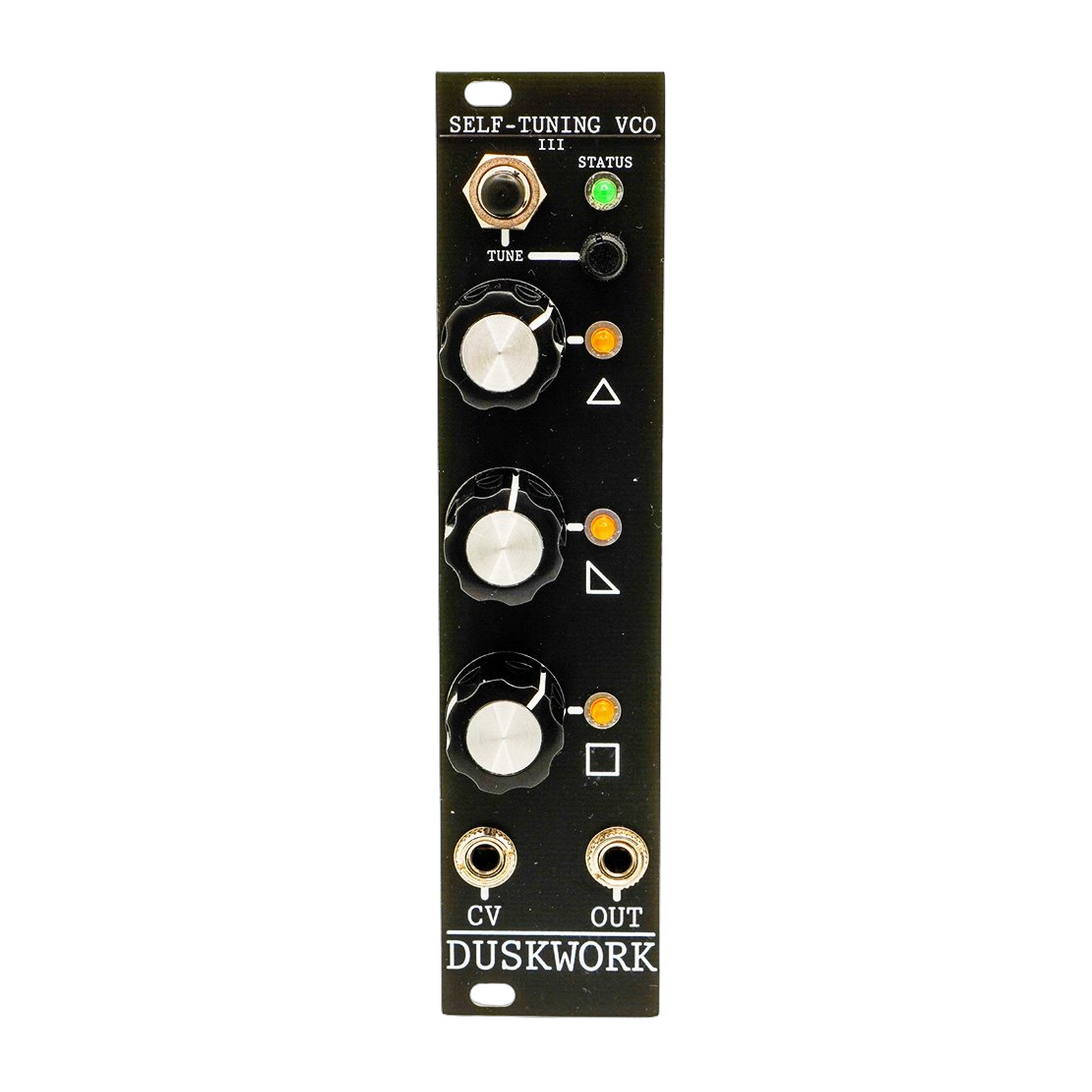
Full DIY kit!
– Analogue voltage controlled oscillator
– Built-in Self-Tuning function
– Manual Fine Tune
– 3-wave mixer: Square, Saw-tooth & Triangle
– Signal level LEDs
– Easy to control & use
The Duskwork Self-Tuning VCO III is designed & built for Eurorack systems, requiring an external +/-12v power supply as per the Eurorack standard. It is just 6HP in width, so it’s easy to fit into any system; from a small skiff to a studio wall.
It contains an in-built Self-Tuning circuit, so gone are the days of finding your tuner. Just hold down a C note on your 1v/oct keyboard and hit tune – wait for the green LED to light up again, and then it will be perfectly in tune. These days, many of us wish to de-tune our VCO’s, and that’s why this updated version of the VCO now has its own manual fine tune knob in addition to the Self-Tuning function.
Another useful feature of this VCO, is the in-built 3 wave mixer. You can mix the 3 waves to your preference; Triangle, Saw-Tooth & Square. Each wave has its own signal LED so that you can tell how loud each wave is at just a glance. There is just one audio output, so no need to keep moving cables if you wanted to change the oscillator source sound.
Size: 6hp

Clatters Machines Garden Listener, Crazy Chicken F.A.T., Bear Modules FADE, MachineRoom Prodigy Dual VCO
Modules on sale!

In 2019 the launch of the arbhar heralded a new generation of granular processing in Eurorack. Sampled audio could be chopped into tiny grains, scattered, shaped, re-pitched, reversed, and layered for an endless range of audio manipulation ranging from seamless frozen tones to mutated acousmatic madness. Each grain sounds with its defined specifications. When modulation is used, the “per-grain parameter” definition allows for true polyphonic layering.
With the introduction of firmware version 2 (2023) comes a complete rewrite of the entire codebase to implement both technical and conceptual improvements that will enhance the entire user experience of arbhar. We have ensured that the overall feel of the module has been preserved as much as possible. Advances in efficiency and expanded features will allow arbhar to explore many more sonic and musical spaces.
Meet the Lexer Method V2
arbhar | ˈɑɾˠuːɾˠ | noun (envelope) a containing structure or layer, a curve joining the successive peaks of a modulated wave
Granular processor Arbhar V2 Features
* Up to 88 sounding polyphonic grains between two granular engines
* Mono and stereo input configurations
* Six 10 second individual audio buffers
* 1 volt per octave pitch tracking
* On-board random pitch deviation and grain direction probability
* Scan Mode, Follow Mode, and Wavetable Mode
* Stereo pan, feedback delay, and reverb configurations
* Built-in condenser microphone
* Analogue input preamplifier and limiter
* USB import and export functionality
* Audio analysis with onset detection for automatic audio capturing
* User-definable configuration file for complete instrument customization
* Includes 2 HP passive CV Expansion module, 2 HP Passive USB Expansion module and 4GB USB flash drive
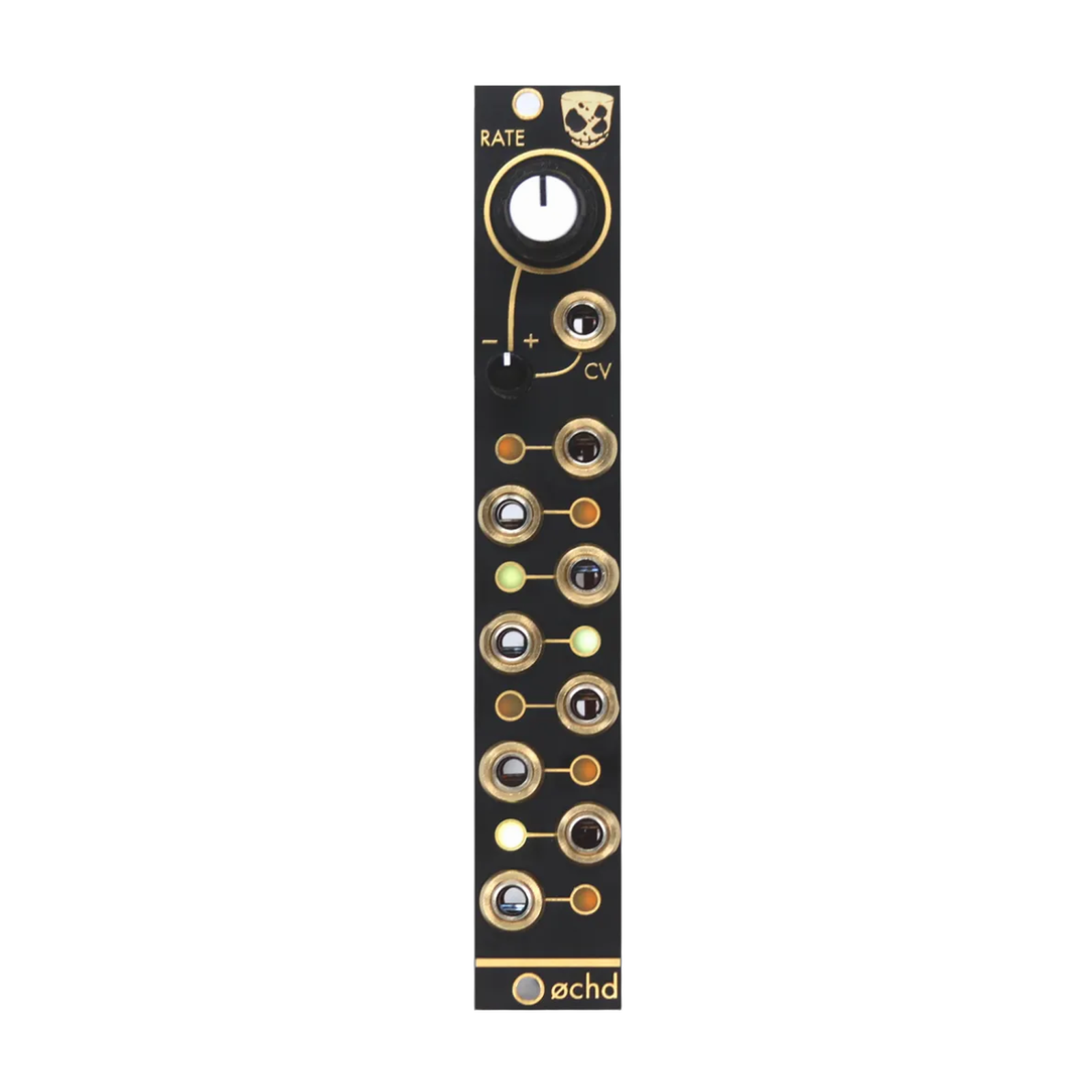
Designed in collaboration with Ben "DivKid" Wilson, the Instruo øchd packs 8 all analogue LFOs into a convenient 4HP package. Each independent core is free running with rates configured from fastest to slowest arranged from top to bottom, with a wide frequency range and CV-controllable global rate with attenuverter.
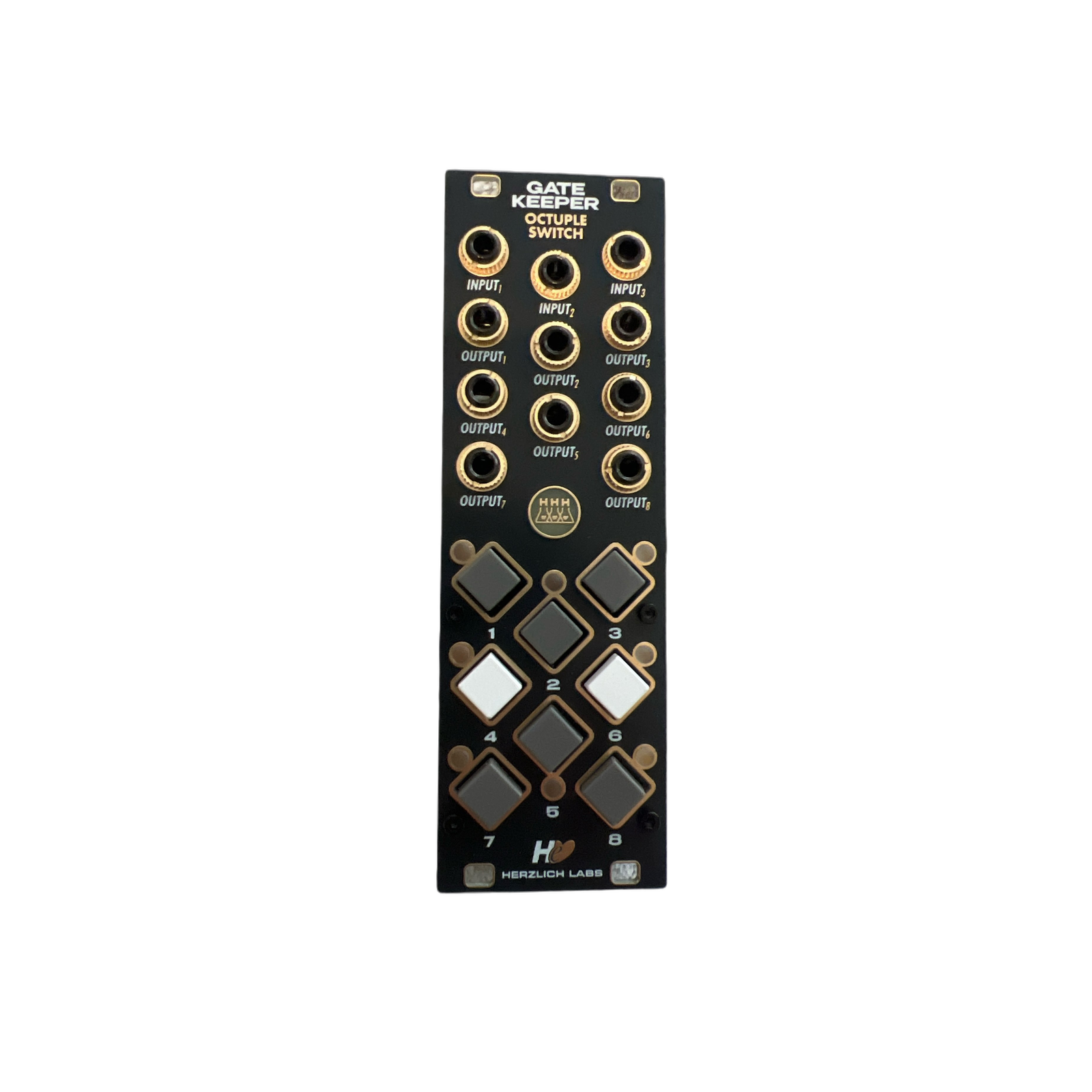
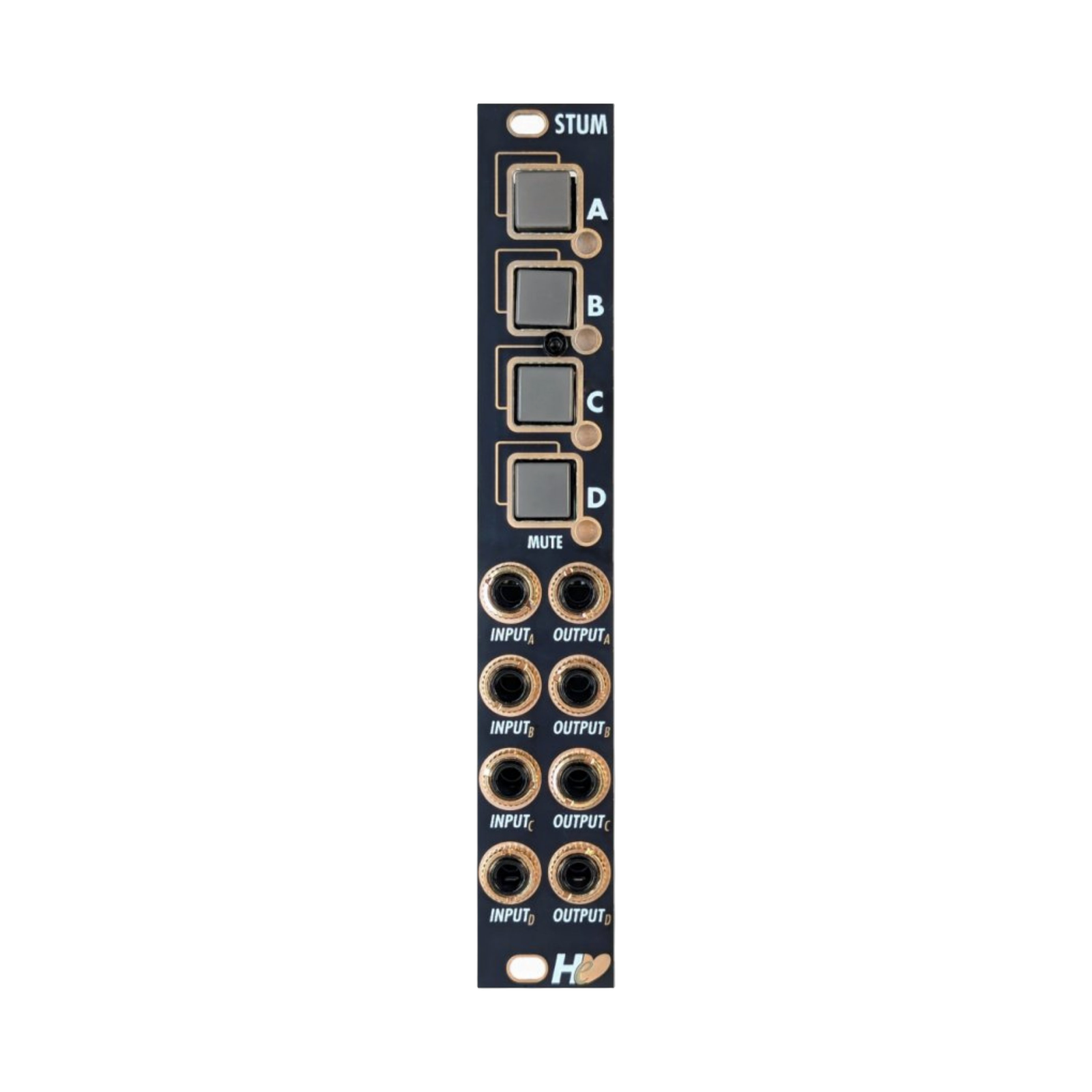
Shush! With Stum it's easy to tame your audio and signals in a soft and gentle manner - four mechanical switches make it easy to quickly turn an incoming signal on or off, and an adjacent LED makes it immediately obvious whether signal is currently passing or not, so performing even in the dark is no challenge at all.
High quality and generously sized mechanical switches sit flat against the panel to prevent accidents, and give you tactile feedback when muting and unmuting, even an audible click - unlike in your output, where you can look forward to no clicks, no abruptly truncated transients and no signal passing when you least want it to. These mutes close and open fully, and in between offer a smooth and pleasant fade-in and fade-out transition thanks to the vactrols assigned to controlling the mute.
Fully analog and built with reliability and longevity in mind, the Stum will be the perfect companion for anyone seeking a small and reliable solution to control their incoming and outgoing signals without fear of clicking, actuation noise, bleed or other unpleasantness.
The module comes with the latching switches.
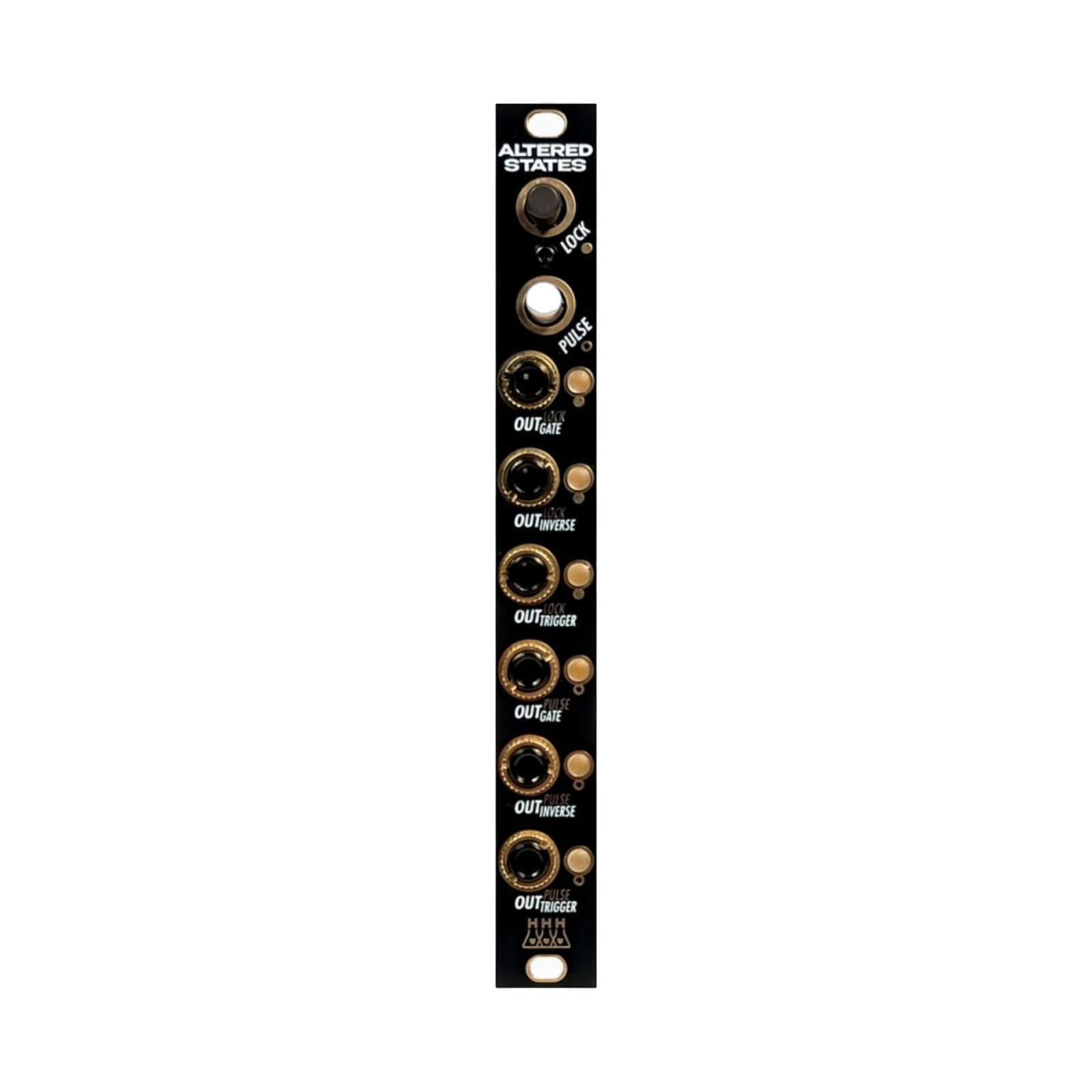
Push button, receive gate and trigger signal.
Okay, that's an oversimplification, but not by much. Altered States is a manual gate and trigger generator that allows you to generate gates and triggers, manually, by hand. The gates and triggers are not hand made, of course, those are made electronically by the circuit within, but you're in control of how and when they happen thanks to the buttons.
Operation is simple: the top button is latching, the lower button is momentary. Each button has three outputs: one which generates a gate when the button is depressed, one which generates a gate when the button is not depressed, and one that generates a trigger in response to the former. Use it to flip/flop between patches, trigger events coincident with turning something on or off, temporarily mute (or unmute) CV or audio, generate your own trigger patterns, the possibilities are limited only by your own creativity.
Generates independent 5v gates in both button states (high and low)
Generates a trigger upon button presses
LEDs visually indicate the current state of any given output
All that, and in just 3hp - create syncopations, tap your way into rhythms, trigger events, flip/flop, trigger logic modules, and all of it by hand, giving you new creative options during performance.
Did you know? During development, the module was called Pusher in reference to the Nicholas Winding Refn trilogy which takes place here, on Amager, where Herzlich Labs modules are hand-built in a torchlit cave on a saber-tooth tiger pelt, using hot rocks for a soldering iron.
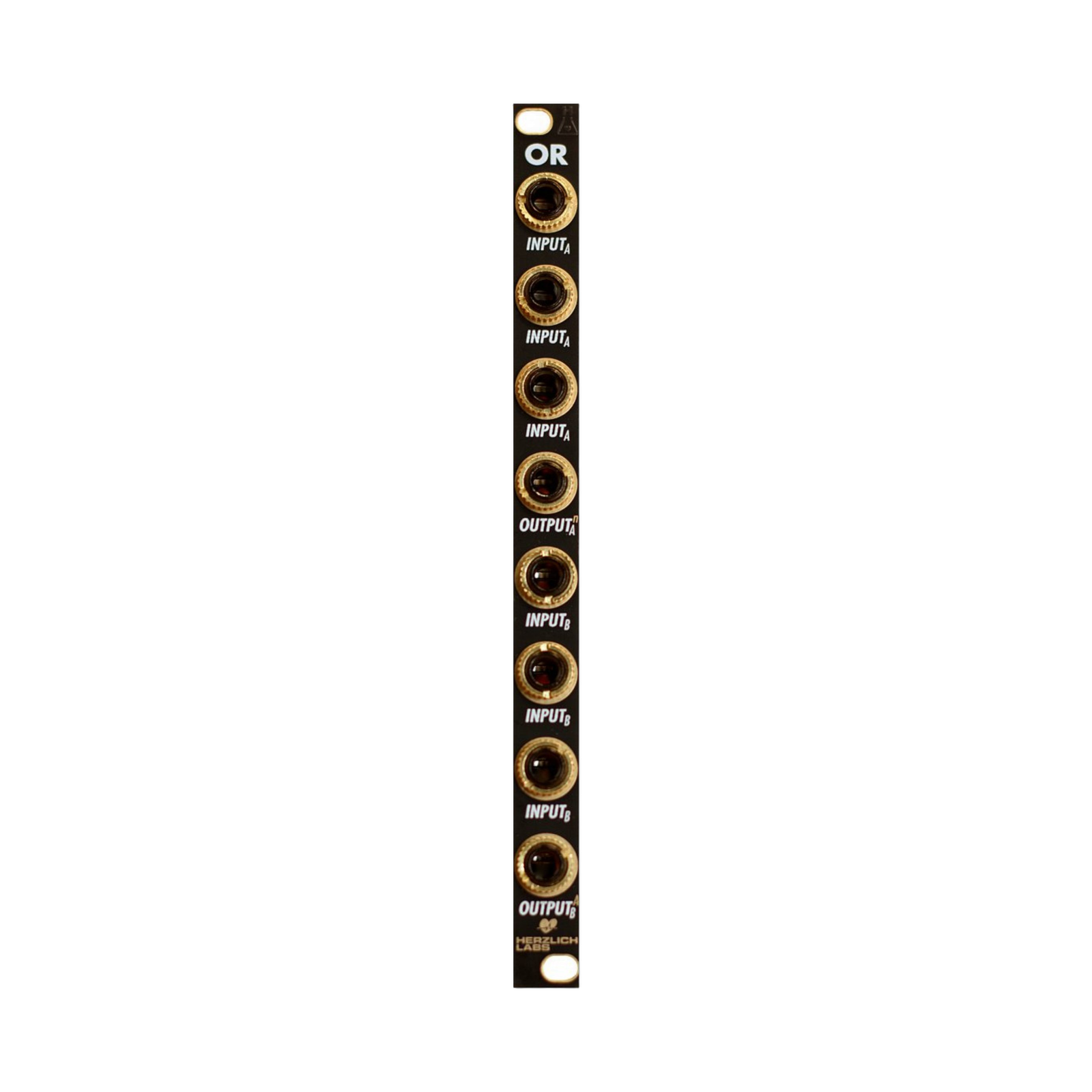
OR? Or what, buddy?
Sometimes, you can’t have it all—it’s one or the other. That’s often the case with logic signals, like gates, clocks, and triggers, and mixing them can lead to unintended and undesirable side effects. The simple solution is the clever application of a bit of logic—OR logic.
An analog logic circuit designed for CV, clock, gate, and triggers.
Use it as a dual 3:1 logic, or leave Output A unplugged to use it as 6:1 logic.
It only passes the strongest current signal while blocking others.
It’s a passive design, so it draws no power from your case.
Trigger patterns, gates, clock, and all fall well in control with the OR. Use the fact that stronger signals take priority to your advantage and attenuate signals that you want to take less priority to build interesting patterns with this analog logic device.
Not experimental enough? Send audio through! You’ll get some very interesting harmonics as all negative waveforms are hard-clipped, and the strongest amplitudes will continuously take precedence over other inputs. You may just discover sounds no one had dared dream of.
What you do now is up to you—or is it?
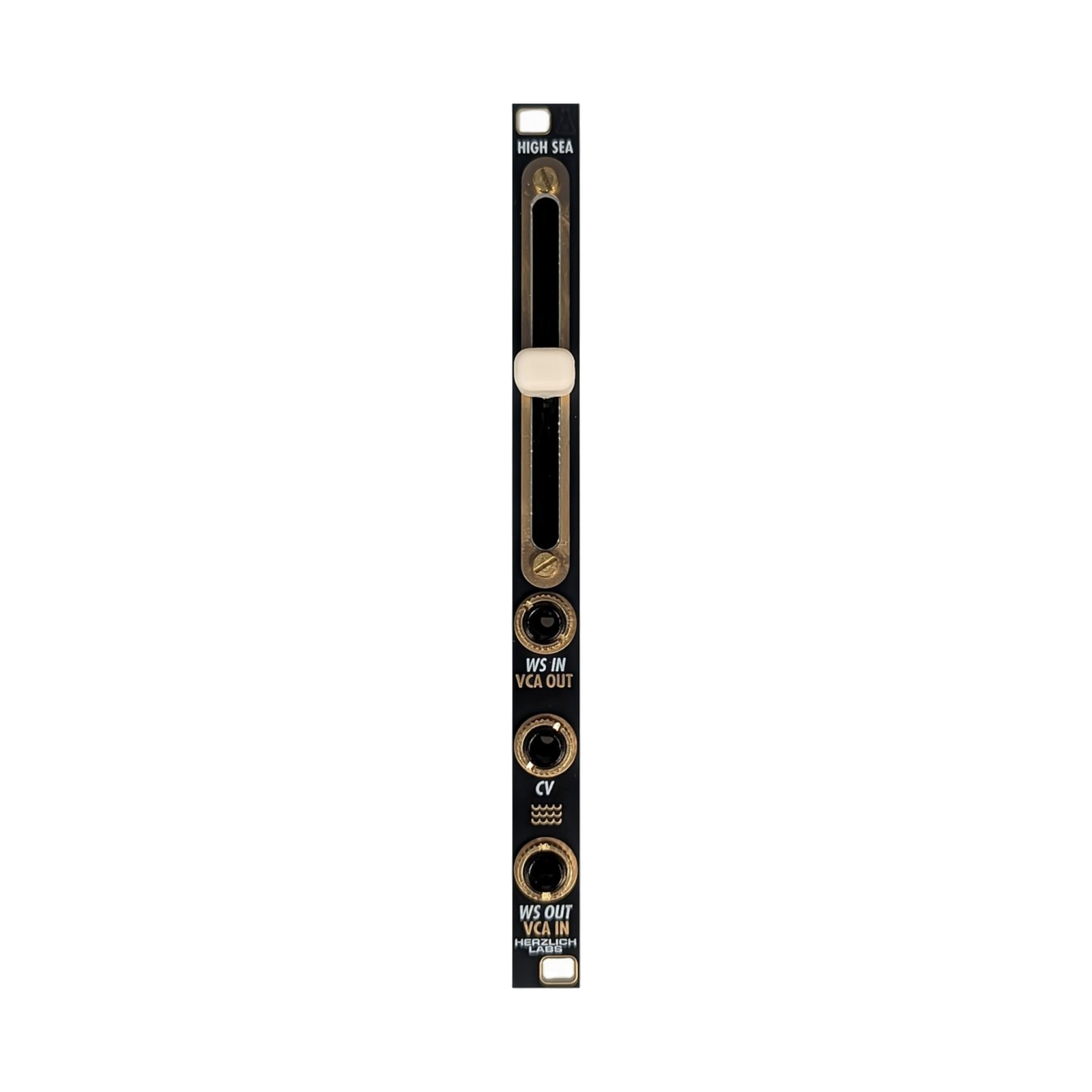
Choppy waves. Calm waves. Square waves?
Listen, there's a reason why if you go out to the sea that the waves out there aren't square, okay? Nature doesn't like to expend energy like that. Nature prefers the path of least resistance. Nice, round sine waves. But not you! You like to expend energy on making cool wave shapes, don't you? Well, I have good news for you - while energy credits are not yet an option, you can expend money to get cool wave shapes right here, thanks to the modestly sized High Sea passive waveshaper.
It also works like a passive VCA, sort of, if you connect it in reverse. It's very temperamental, and likes some audio and CV sources more than others. Your results may vary - or surprise you. It's first and foremost a fun little waveshaper, the other part is more of a cute oddity the same way that a benign but conspicuous growth on your arm can be a good conversation starter at a party.
• Fold and bend wave forms into new, exciting shapes
• Create delicious harmonics where there previously were none
• Connect it in reverse to unleash it's powers as a VCA (terms and conditions apply)
• Passive design: draws no power from your case
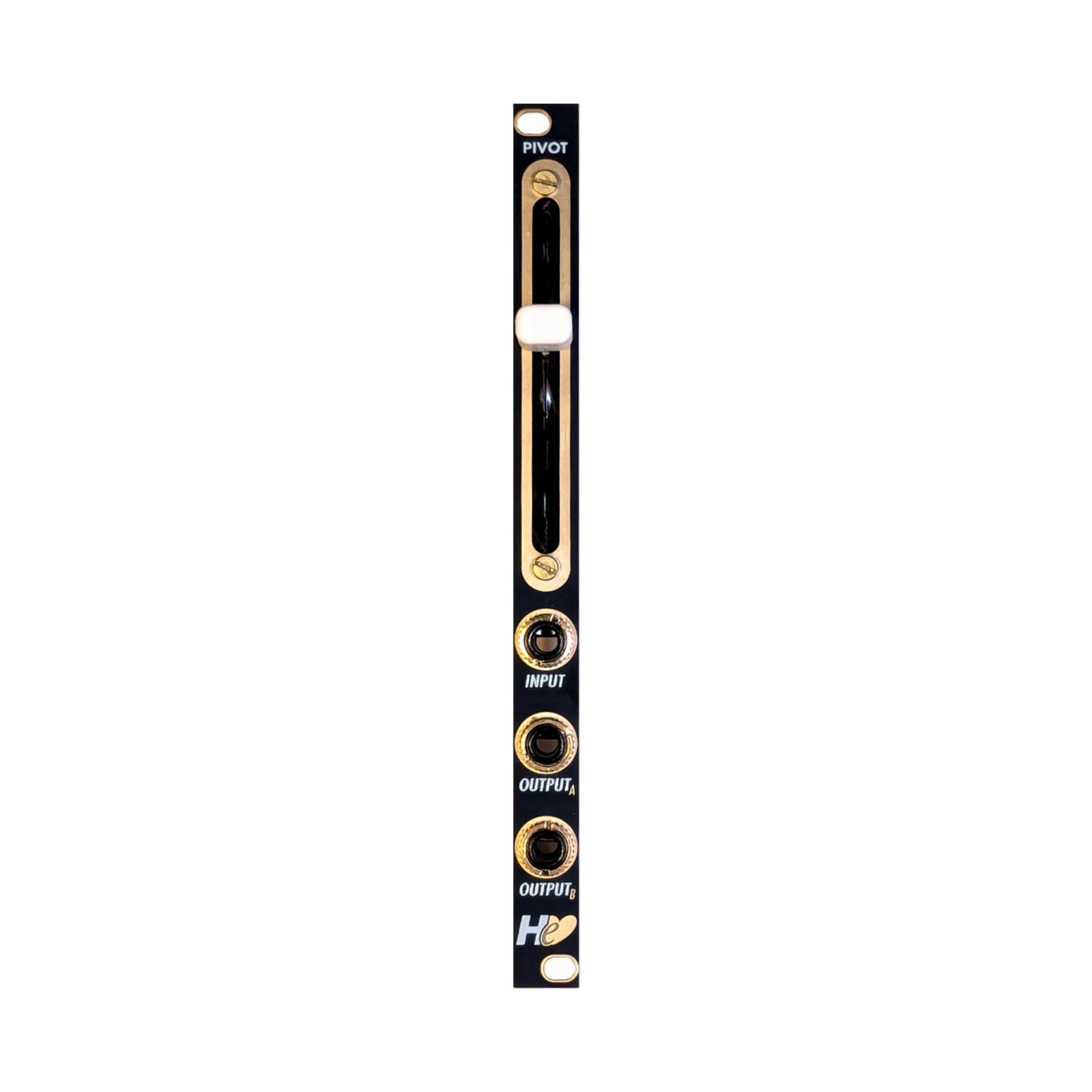
The Pivot is a simple module, dedicated to doing one thing really well: panning and balancing.
The long and smoothly controlled fader makes it easy to strike the right balance between the input and the two outputs, which continuously share each their portion of the input signal. With input buffering and a dual-gang potentiometer, the signal for one channel will fully close at either extreme end and perform with perfect consistency when you need it most.
Use it for panning, wet/dry control, transitioning between different audio or CV destinations - or even just as an attenuator in a pinch. The Pivot isn't the most complicated panner and balance mixer on the market, but rock solid build quality, design and component choices make it a reliable companion in any performance setup.
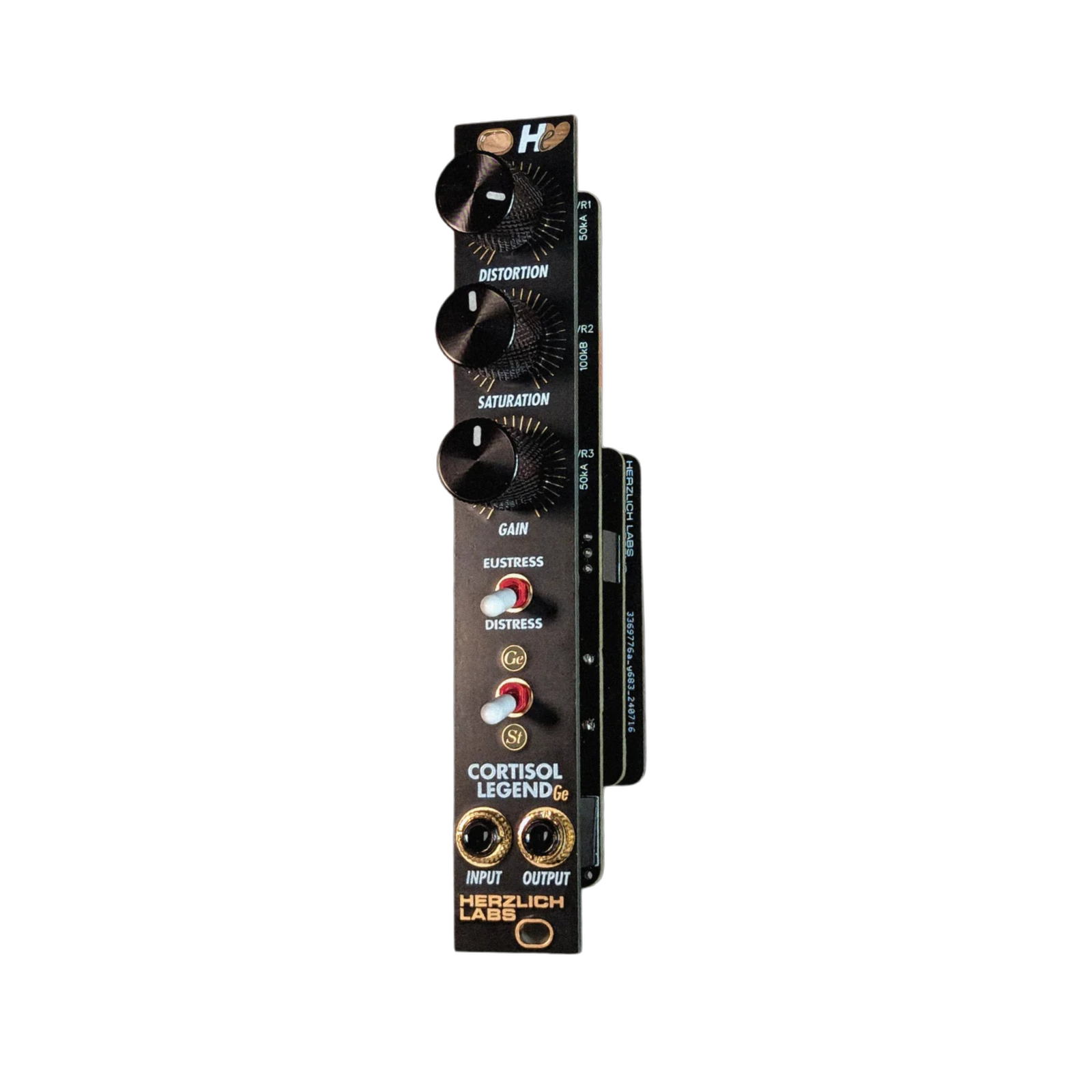
Introducing the Cortisol Legend: a spiritual successor to one of my early designs, the Steroid Legend, it presents as 4hp of white hot saturation and hairy distortion, and features manual control over two op-amp driven gain stages, with a diode saturation control in the middle, giving you precise control over distortion ranging from smoldering saturation all the way into utter rail-to-rail fuzzification.
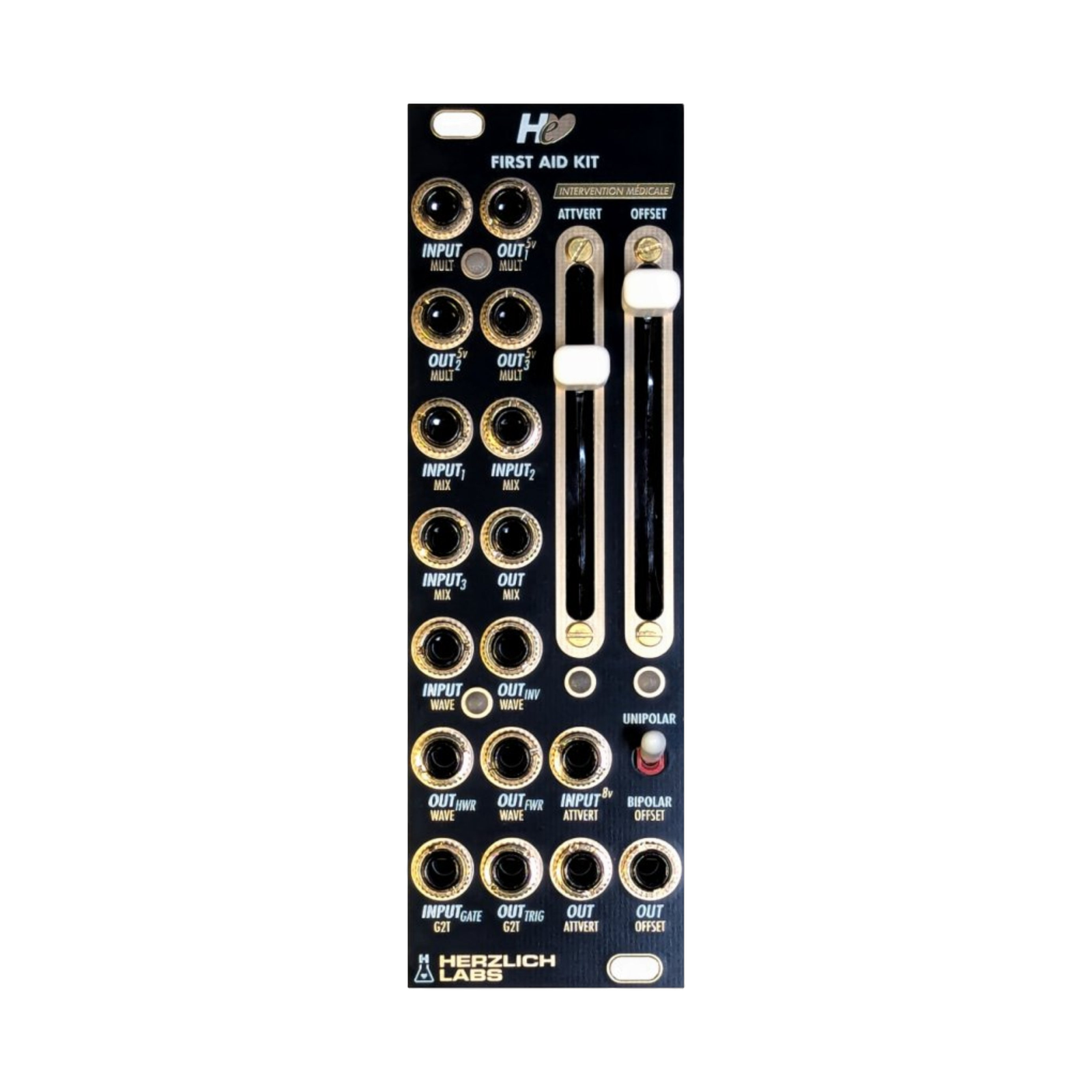
The First Aid Kit is here to be your first choice, regardless of whether you're picking out your first utility module, building a minimal system or expanding a large system, by offering a powerhouse toolbox built on the principle of "everything you need, nothing you don't."
Offering ten functions in just 8hp, you can feel assured that you are no longer likely to run into dead ends while patching, because you need just one more utility - no need to buy lots of specialized utility units either, which can be both costly and space ineffecient, as you get all in one with the First Aid Kit.

Elmyra 2 White Desktop by Neutral Labs
Other featured products

Pocket SCÍON is a portable device that captures biofeedback data sourced from contact with living organisms. This data is used by an onboard sound engine to generate evolving soundscapes, a range of MIDI messages and biofeedback data which is made accessible via the accompanying desktop application.
Anyone can create, shape and enjoy music with Pocket SCÍON, regardless of existing musical experience. Despite its stand-alone, plug-and-play interface, experienced or adventurous users can use the MIDI and OSC output capabilities to integrate Pocket SCÍON into their studios, installations and audio-visual projects.
Pocket SCÍON includes instruments created exclusively for the device, made in collaboration with Tarun Nayar (Modern Biology), an ecologist, musician and prolific user of our Eurorack format SCÍON module.
SCÍON | ‘sö:ən| noun: (biology) young shoot or stem useful for sprouting or forming new roots, descendant of a noble family
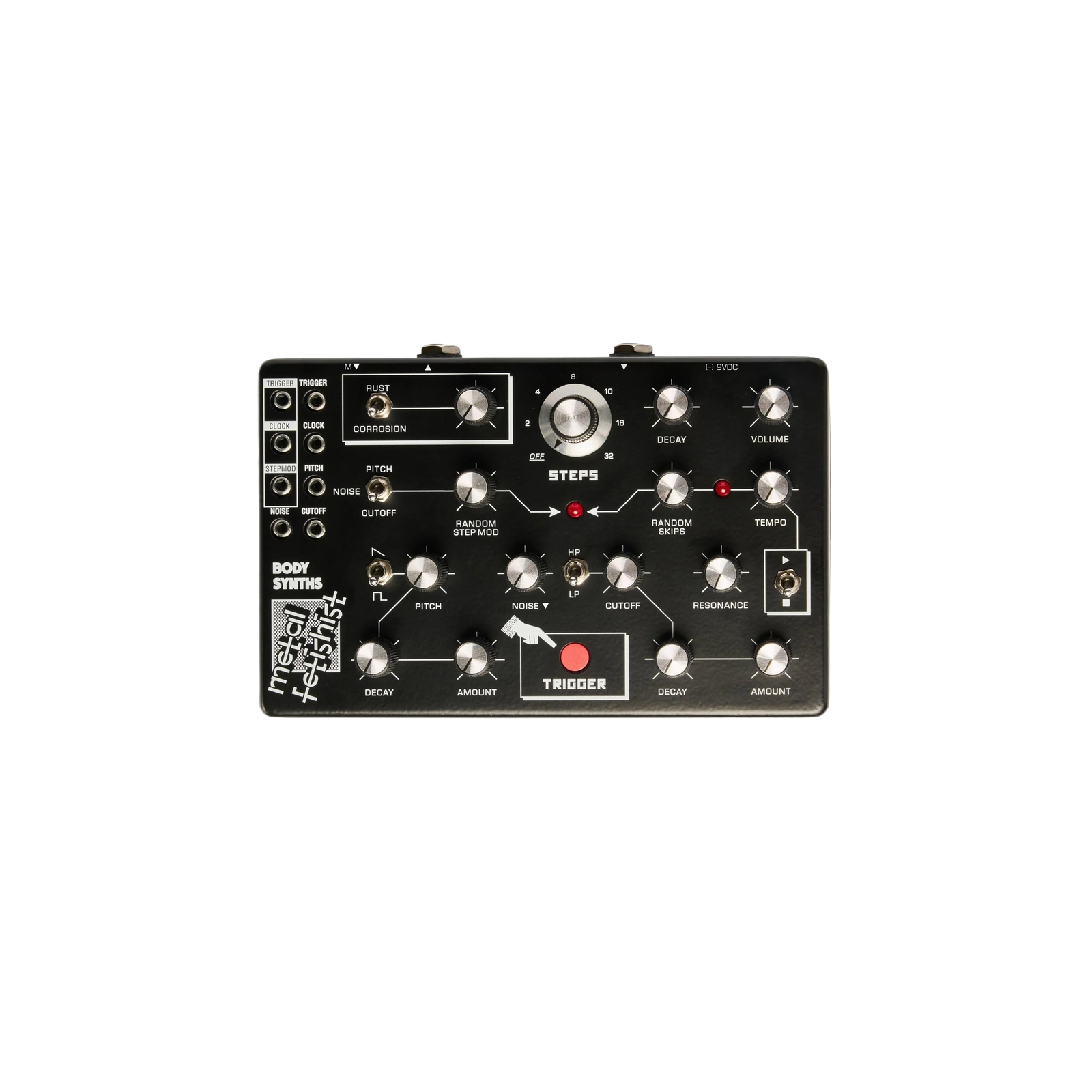
Metal Fetishist from Body Synths is a compact, digital percussion synthesizer with CV connections and onboard random sequencing. Sounds are generated using a noise generator and oscillator to create engaging and dynamic rhythms. Using the Random Step Mod and Random Skips knobs, you can introduce random fluctuations based on the Tempo and the number of steps is determined by the Turning machine-inspired Steps knob. Send this information to the Pitch, Noise, or Cutoff and control these parameters manually, as well. Interface directly with your Eurorack environment using the 8 patch points and plug an audio source directly into the Metal Fetishist for audio processing, passing through the filter and distortion. Metal Fetishist by Body Synths is a unique way to create abrasive, hard-hitting percussion.
Features:
Oscillator and Noise-based sound source
Internal randomness sequencer goes from 0–32 steps
Sequencer can be routed to Pitch, Noise, or Cutoff
Random Step Mod and Random Skips introduce uncertainty
Noise knobs functions as a crossfader from Osc-to-Noise
High and Low pass filter switch with Cutoff and Resonance
3x Decay envelopes for Pitch, Cutoff, and Volume
Trigger, Clock, and Stepmod CV outputs
Tigger, Clock, Pitch, Cutoff, and Noise CV inputs
Distortion in two flavors: Corrosion for basic and Rust for a downsampling varietal
Audio input goes through Filter and Distortion
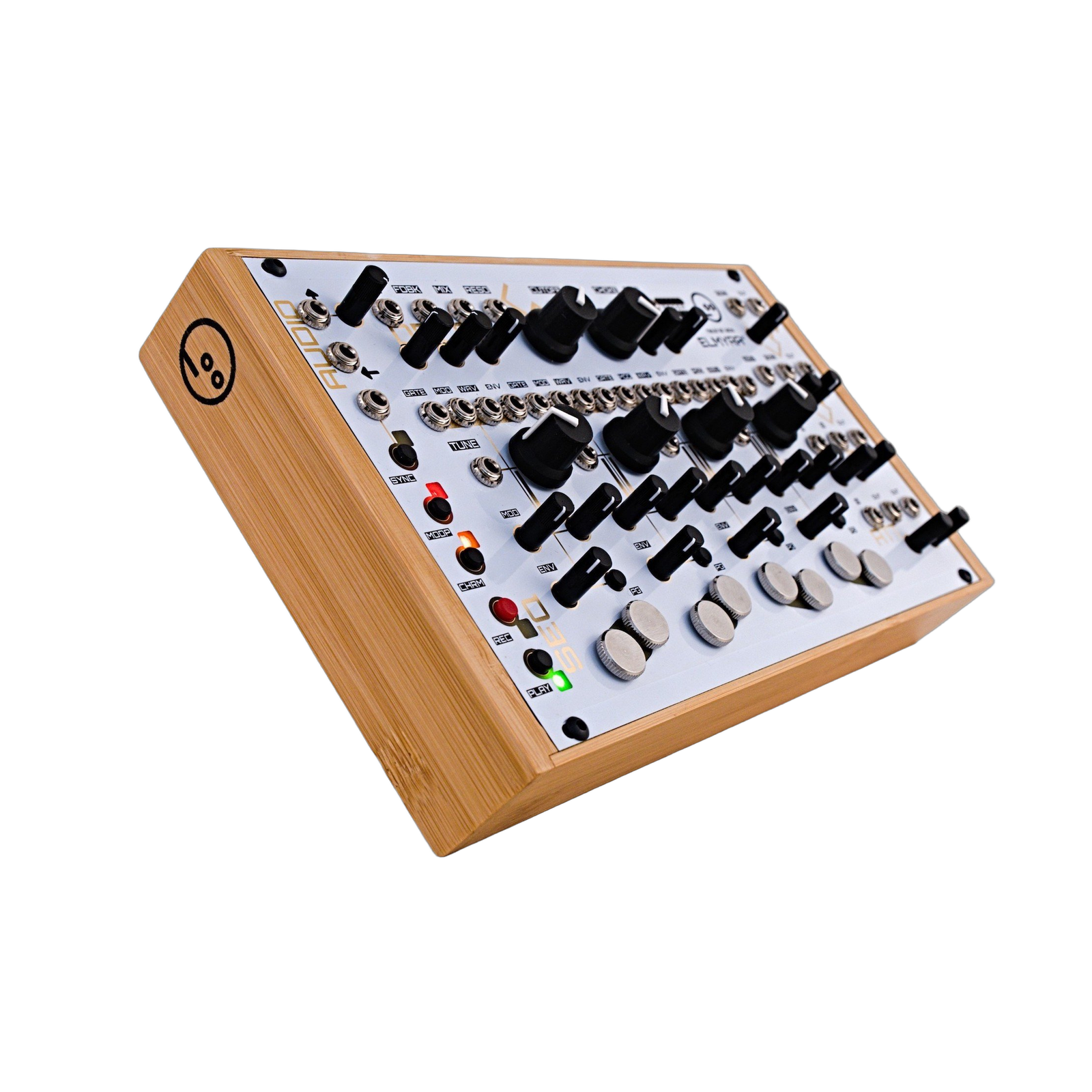
The successor to the widely acclaimed Elmyra, Elmyra 2 is a 4-voice digital/analog hybrid drone synthesizer and platform for microtonal sonic exploration, capable of creating anything from lush ambient soundscapes to gritty droning textures and shrieking noises, available as a 42 HP Eurorack module or semi-modular desktop synth. With 31 modulation targets, 4 polymetric sequencers, delay, additional per-voice effects, a choice of various filters, as well as onboard LFOs and utilities, it is essentially a purpose-built small modular system in itself. A set of preset cards (included) or electronic components like capacitors or diodes can be plugged into the front panel in order to change the sound character.
Feature overview:
4 independent voices activated by touch or CV
wavetable-based complex oscillator engine, up to 12 oscillators in total, 1V/octave compatible
chromatic mode makes chords and harmonic sounds possible, microtonal scales supported
41 patch points
31 modulation targets
touchpads with analog envelopes that can be used as modulation sources
resonant filter switchable between:
boomy and aggressive multimode 2-pole state variable filter (low-pass, band-pass, high-pass)
creamy 4-pole low-pass ladder filter
delay with unhealthy amounts of feedback
lo-fi reverb
analog OUCH circuit: a unique combination of destructive distortion, waveshaping and filtering
sonic character can be customised by using special preset cards (set of 4 included) or components like diodes that can be plugged into the front panel
preset cards can be used with other Neutral Labs modules
external audio can be processed via audio input
9 per-voice modulations and effects:
unison detune
dual sub-oscillators
saturation
bitmangler
sample rate reduction
noise
high-pass filter
low-pass filter
2 LFOs: 1 sine, 1 complex morphable
4 sequencers with arbitrary step length per voice (up to 128), allows polymetric structures
delay time and LFOs can be clock-synced or unsynced (tap tempo is also possible)
utilities
dual attenuator/buffered multiple/voltage generator
CV summing circuit
solid bamboo case
boutique synth handmade in Germany
Supports preset cards (Nuts).Can be found here.
Downloads:
Size: 42 HP
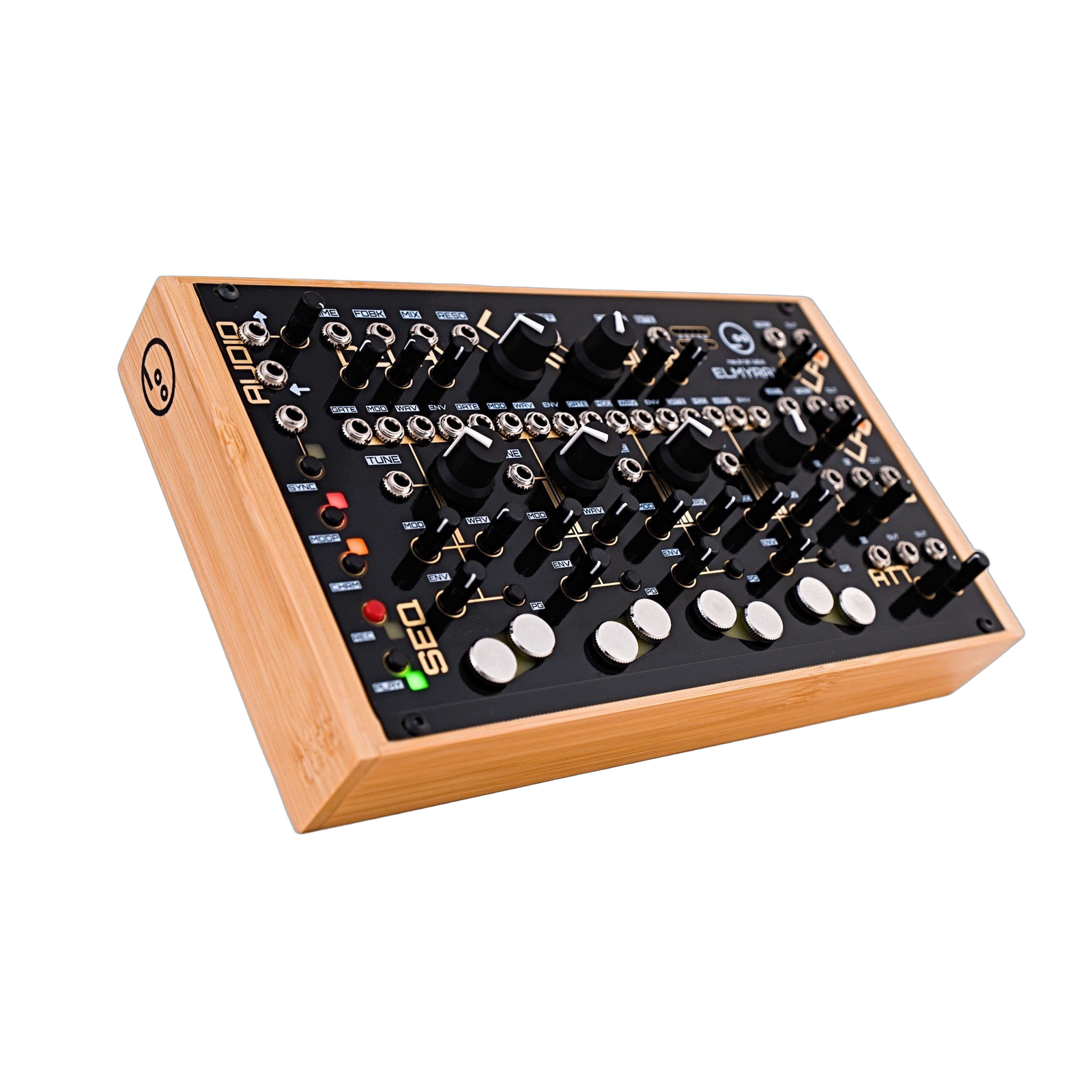
The successor to the widely acclaimed Elmyra, Elmyra 2 is a 4-voice digital/analog hybrid drone synthesizer and platform for microtonal sonic exploration, capable of creating anything from lush ambient soundscapes to gritty droning textures and shrieking noises, available as a 42 HP Eurorack module or semi-modular desktop synth. With 31 modulation targets, 4 polymetric sequencers, delay, additional per-voice effects, a choice of various filters, as well as onboard LFOs and utilities, it is essentially a purpose-built small modular system in itself. A set of preset cards (included) or electronic components like capacitors or diodes can be plugged into the front panel in order to change the sound character.
Feature overview:
4 independent voices activated by touch or CV
wavetable-based complex oscillator engine, up to 12 oscillators in total, 1V/octave compatible
chromatic mode makes chords and harmonic sounds possible, microtonal scales supported
41 patch points
31 modulation targets
touchpads with analog envelopes that can be used as modulation sources
resonant filter switchable between:
boomy and aggressive multimode 2-pole state variable filter (low-pass, band-pass, high-pass)
creamy 4-pole low-pass ladder filter
delay with unhealthy amounts of feedback
lo-fi reverb
analog OUCH circuit: a unique combination of destructive distortion, waveshaping and filtering
sonic character can be customised by using special preset cards (set of 4 included) or components like diodes that can be plugged into the front panel
preset cards can be used with other Neutral Labs modules
external audio can be processed via audio input
9 per-voice modulations and effects:
unison detune
dual sub-oscillators
saturation
bitmangler
sample rate reduction
noise
high-pass filter
low-pass filter
2 LFOs: 1 sine, 1 complex morphable
4 sequencers with arbitrary step length per voice (up to 128), allows polymetric structures
delay time and LFOs can be clock-synced or unsynced (tap tempo is also possible)
utilities
dual attenuator/buffered multiple/voltage generator
CV summing circuit
solid bamboo case
boutique synth handmade in Germany
Supports preset cards (Nuts). Can be found here.
Downloads:
Size: 42 HP
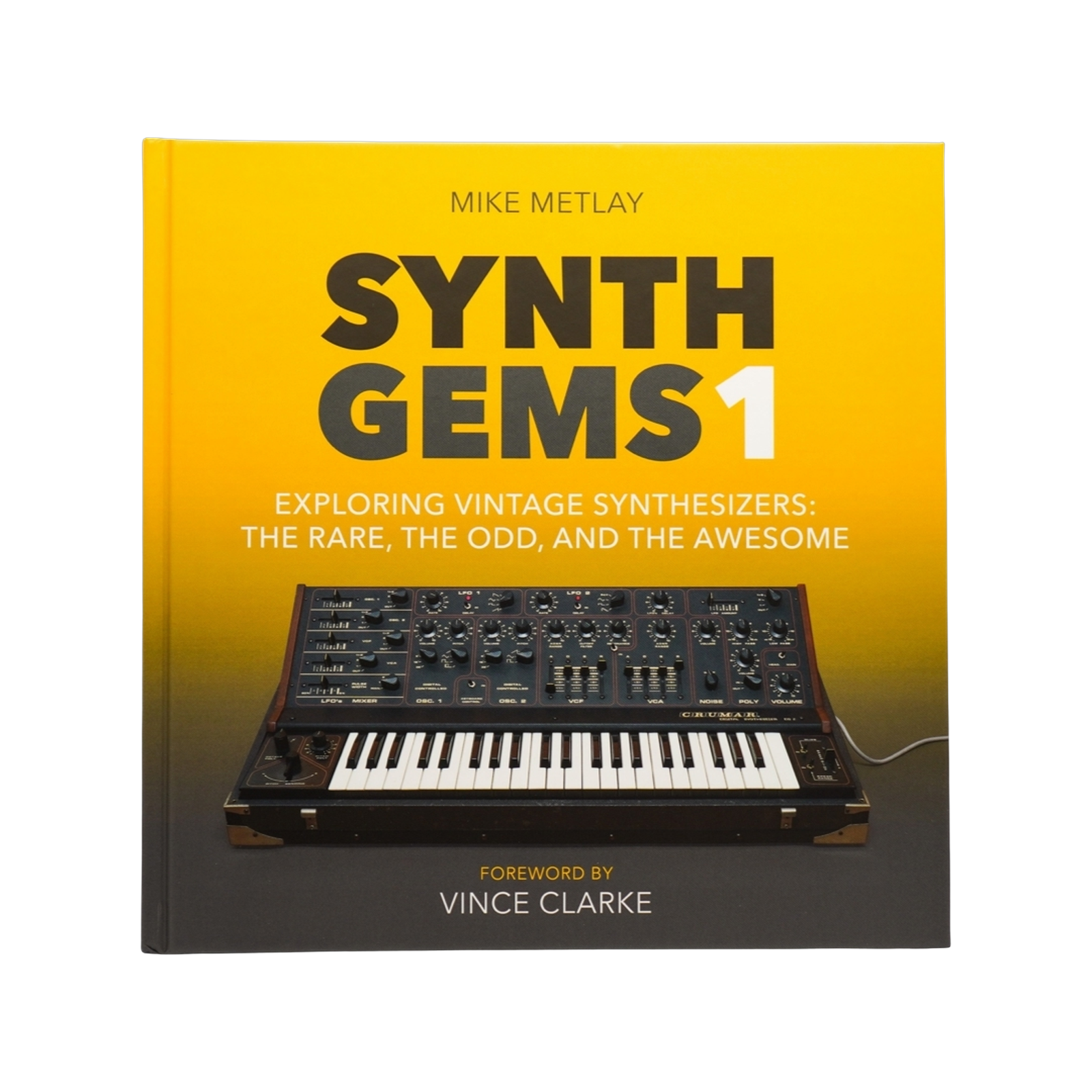
SYNTH GEMS 1 is your guide to an eclectic and amazing collection of synthesizers as art. Experience the history, technology, and sonic innovation of electronic music in a completely new way.
As much for serious synth enthusiasts as for newcomers to electronic music, SYNTH GEMS 1 is an enlightening look into the wonderful world of vintage synthesizers.
60+ selected vintage synthesizers
330+ unique color photos
Foreword by master synthesist Vince Clarke
320 colorful pages printed on high-quality certified-ecofriendly paper
Hardcover format (9.8" x 9.8" / 25 x 25 cm)
An art gallery of electronic aesthetics
SYNTH GEMS 1 takes you on a tour of over 60 remarkable keyboards — large and small, famed and rare, elegant, beautiful, and brutal… and ranging from classics that define entire genres to rare oddities that bring their own grace to the world.
Each synthesizer is presented in a series of finely detailed photographs, with a discussion of its origins and importance. From the dawn of commercial synthesis to the close of the Twentieth Century, the lives and times of these unique instruments are chronicled in exquisite pictures and thoughtful stories – mingling music, technology, commerce, and visual art.
Meet the synthesizer
Besides a brief introduction to the basic elements of synthesizer design, as well as a comprehensive Glossary, the book is rounded out by tours of the three museums that opened their collections to be photographed, and a selection of resources for further study: books, films, educational initiatives, online resources – even ways to play with these sounds at home.
Known classics and significant rarities
Explore the designs and read the stories behind instruments from famous brands such as ARP, Casio, Clavia, Korg, Moog, Oberheim, Roland, Sequential, and Yamaha – as well as vintage gems from Crumar, Electronic Dream Plant, Elgam, E-mu, Ensoniq, Fairlight, Kawai, Gleeman, Lord Synthesisers, Steiner-Parker, Technics, Waldorf, and more.


Announcing Flora Quatrovertalius
Four channels of chained attenuversion.
Use it as an attenuator, inverter, offset generator and mixer.

Eurorack

Other products
The First Aid Kit is here to be your first choice, regardless of whether you're picking out your first utility module, building a minimal system or expanding a large system, by offering a powerhouse toolbox built on the principle of "everything you need, nothing you don't."
Offering ten functions in just 8hp, you can feel assured that you are no longer likely to run into dead ends while patching, because you need just one more utility - no need to buy lots of specialized utility units either, which can be both costly and space ineffecient, as you get all in one with the First Aid Kit.